
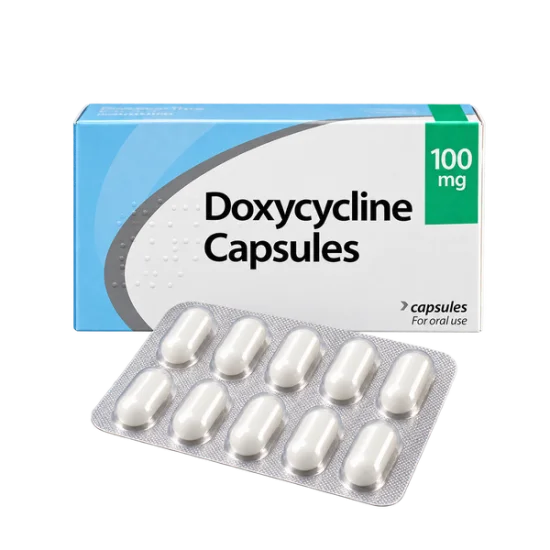
Doxycycline
Active ingredient: Doxycycline
Delivery: from 4 days
- Only original products
- Worldwide Delivery
- 24/7 Support
Patients with confirmed or strongly suspected bacterial infections may be prescribed Doxycycline, a broad-spectrum tetracycline antibiotic. It is used for selected respiratory, sexually transmitted, skin, tick-borne, and other bacterial infections, and can also prevent malaria in specific travel settings. Doxycycline slows bacterial growth by blocking protein production inside susceptible bacteria.
Product information
Doxycycline belongs to the tetracycline antibiotic class. It is supplied here as oral capsules containing doxycycline for treatment of susceptible bacterial infections.
Therapeutic indications
Doxycycline is prescribed for several bacterial conditions when the suspected or confirmed organism is susceptible. The clinical decision depends on the diagnosis rather than on symptoms alone.
Common medical uses include:
- Lyme disease caused by susceptible Borrelia species.
- Selected respiratory tract infections.
- Chlamydia infections and some other sexually transmitted bacterial infections.
- Acne vulgaris when inflammation is substantial or topical treatment is insufficient.
- Rosacea when inflammatory lesions require oral treatment.
- Certain rickettsial and other tick-borne infections.
- Malaria prevention in specified travel situations.
- Selected infections caused by atypical bacteria.
Lyme disease and tick-borne pathogens
Doxycycline is used against several tick-borne pathogens, including Lyme bacteria. Treatment is selected according to the clinical presentation, duration of symptoms, neurological or cardiac involvement, and local guidance.
Acne and rosacea treatment
For acne vulgaris, doxycycline can reduce inflammatory lesions through antibacterial and anti-inflammatory effects. The aim is usually to reduce active inflammation and prevent new lesions while a broader skin-care plan addresses maintenance.
Rosacea treatment also relies partly on anti-inflammatory action. Some dermatological regimens use a lower anti-inflammatory exposure than regimens intended to treat an active bacterial infection. The dose and duration must be selected by the prescriber; these approaches are not interchangeable.
How it affects the body
At the bacterial-cell level, doxycycline binds to the 30S ribosomal subunit. Ribosomes assemble proteins that bacteria need to grow and multiply. By interfering with this process, doxycycline usually acts as a bacteriostatic antibiotic: it limits bacterial reproduction and allows the immune system to clear the infection.
Doxycycline is a broad-spectrum tetracycline antibiotic, although “broad-spectrum” does not mean that it treats every infection. Antibiotics work only against susceptible bacteria. They do not treat influenza, COVID-19, or other viral illnesses.
The World Health Organization places antibiotic selection within antimicrobial-stewardship principles, meaning the narrowest suitable treatment is preferred when the causative organism is known [1].
When not to use it
- Pregnancy, especially later pregnancy, because tetracyclines can affect fetal bone and tooth development.
- Breastfeeding, where the expected benefit and treatment duration must be assessed.
- Children under eight years of age, except for specific specialist indications.
- Severe liver disease.
- Previous oesophagitis or difficulty swallowing.
- Raised intracranial pressure or unexplained persistent headaches.
- Concurrent isotretinoin or another systemic retinoid.
- Treatment with medicines or supplements containing aluminium, magnesium, calcium, iron, or zinc.
Combining doxycycline with isotretinoin or other systemic retinoids may raise the risk of intracranial hypertension, which can present with severe headache, nausea, vomiting, or visual disturbance. This combination should be avoided unless a specialist has explicitly assessed the need.
This medication is not for you if you have a previous serious allergic reaction to doxycycline or another tetracycline, unless a specialist has established a safe alternative plan.
When this is not for you
Doxycycline is not suitable for everyone. Extra caution or specialist review is needed during pregnancy, breastfeeding, in children under eight years of age, with severe liver disease, swallowing problems, persistent unexplained headaches, or when taking isotretinoin or mineral supplements.
Stop and obtain urgent medical help for facial swelling, breathing difficulty, blistering skin, extensive rash, severe headache with visual symptoms, or profuse watery diarrhoea. The FDA prescribing information describes these as clinically significant warning patterns rather than minor expected discomforts [3].
Possible side effects
The most common problems involve the digestive system. Nausea, abdominal discomfort, loose stools, and diarrhoea can occur. Taking the capsule with sufficient water helps reduce irritation, though calcium-rich food and mineral supplements may need to be separated because they can lower absorption.
Other possible reactions include:
- Headache or dizziness.
- Increased sensitivity to sunlight.
- Oesophagitis, which may cause painful swallowing or chest discomfort.
- Oral or vaginal thrush caused by disruption of normal microorganisms.
- Skin rash or allergic reaction.
- Rare liver injury or severe skin reactions.
- Antibiotic-associated diarrhoea, including Clostridioides difficile infection.
Watery or bloody diarrhoea during treatment, or diarrhoea that develops after the course ends, needs medical assessment. Do not treat severe antibiotic-associated diarrhoea with anti-diarrhoeal medicines without clinical advice.
Photosensitivity may appear after ordinary exposure rather than only after a day at the beach. Burning on the forearms, face, or neck can occur sooner than expected.
Ingredients
Doxycycline can be prepared as different salts, including doxycycline monohydrate and doxycycline hyclate. These salts deliver the same active antibiotic, but their formulation, tolerability, and release characteristics can differ.
Delayed-release oral tablets are designed to release doxycycline in a modified way. Immediate-release capsules and delayed-release tablets should not be treated as identical products, even when the total amount of active drug appears similar. The product form affects how the dose is delivered.
| Formulation category | Main feature | Practical point |
|---|---|---|
| Doxycycline monohydrate | Doxycycline salt used in oral treatment | Often selected when gastrointestinal tolerability is a concern |
| Doxycycline hyclate | Another doxycycline salt used in oral treatment | Follow the specific prescribed schedule for that formulation |
| Delayed-release oral product | Modified release of doxycycline | Do not crush, chew, or split unless the product information specifically permits it |
Absorption can be reduced by calcium, magnesium, aluminium, iron, and some mineral preparations. Food instructions may differ between formulations, so the prescribed product’s directions take priority.
Dosage and administration
The dose is decided individually, taking age, other medicines, and health conditions into account.
The intended duration varies. A short course may be suitable for one infection, while a longer course may be needed for dermatological disease or a complicated infection. Do not save remaining capsules for a later illness or share them with another person.
The required separation period depends on the specific product and interacting substance. Follow the individual schedule provided for the prescription rather than creating a shortened interval.
If a dose is missed, take it when remembered unless the next scheduled dose is close. Do not double doses. Repeated vomiting soon after a dose may require individual advice because absorption could be incomplete.
Comparison
Doxycycline, minocycline, and tetracycline are related medicines, but they are not interchangeable. Their absorption, dosing frequency, tissue distribution, adverse effects, and approved uses differ.
| Antibiotic | Clinical profile | Main limitation |
|---|---|---|
| Doxycycline | Long-acting tetracycline with broad use in respiratory, skin, genital, and tick-borne infections | Photosensitivity, gastrointestinal irritation, and interaction with minerals |
| Minocycline | Tetracycline with strong tissue distribution and dermatological use | Dizziness, pigmentation changes, and vestibular symptoms can occur |
| Tetracycline | Older tetracycline agent used for selected susceptible infections | More frequent dosing and greater sensitivity to food-related absorption problems |
Doxycycline is often chosen when a longer duration of action and good tissue distribution are useful. Minocycline may be selected for specific dermatological circumstances, while older tetracycline therapy may be appropriate when susceptibility and clinical guidance support it.
The European Medicines Agency describes tetracycline-class safety considerations that apply across related agents, while individual product information determines the exact regimen and restrictions [2].
Common mistakes
Several avoidable habits reduce treatment success or increase adverse effects:
- Taking the capsule with only a sip of water.
- Lying down immediately after swallowing it.
- Taking it together with iron, calcium, magnesium, zinc, or an antacid.
- Stopping when fever, acne inflammation, or pain improves.
- Doubling the next dose after a missed dose.
- Spending prolonged time in strong sunlight without protection.
- Sharing leftover capsules with a family member.
- Using doxycycline for a new illness without a diagnosis.
- Combining it with isotretinoin without a prescriber’s review.
- Assuming all doxycycline formulations can be crushed or opened.
What doctors say
Clinicians usually judge doxycycline by three questions: is the diagnosis bacterial, is the organism likely to respond, and can the patient take the medicine without a preventable interaction or administration problem?
A doctor may also explain that symptom relief does not prove bacterial eradication. For acne and rosacea, visible improvement can take time because inflammation settles gradually. For Lyme disease or chlamydia, follow-up may involve testing, examination, or assessment of persistent symptoms.
Antibiotic stewardship remains central. Doxycycline should not be used for a cold, uncomplicated viral sore throat, or other viral illness. The WHO and national health authorities, including MOHAP, support prescribing antibiotics for appropriate bacterial indications rather than for pressure from symptoms alone.
Common questions
What should I do if the expected result does not come?
Persistent symptoms can mean that the infection is viral, the bacteria are resistant, the diagnosis is different, or a complication needs attention. NICE guidance and WHO antimicrobial-stewardship principles support clinical reassessment rather than extending or repeating antibiotics without a new evaluation, as reflected in guidance available through 2021 and later updates [4]. Seek prompt assessment for worsening fever, breathing difficulty, dehydration, severe pain, spreading rash, or neurological symptoms. Do not take extra capsules to force a faster response.
What is the best time of day to take Doxycycline?
The best time depends on the prescribed schedule and the formulation, but a consistent time makes missed doses less likely. The EMA product information for doxycycline medicines from 2023 stresses administration with sufficient water and precautions against lying down immediately afterward [2]. Avoid taking it beside iron, calcium, magnesium, zinc, or aluminium-containing products. A morning or midday dose is often practical because it is easier to remain upright, although the prescribed regimen takes priority.
How long does a course last, and is long-term use acceptable?
Treatment length depends on the infection, its severity, the suspected organism, and the clinical response. Lyme disease, chlamydia, respiratory infection, acne, rosacea, and malaria prevention each use different treatment plans. WHO antibiotic guidance published in 2022 supports using the shortest duration that adequately treats the diagnosed infection, while longer dermatological courses require periodic review. Long-term use should not continue automatically because digestive problems, photosensitivity, thrush, resistance, and rare serious reactions remain possible.
Can the capsule be split, crushed, or chewed?
Capsules should be swallowed whole unless a prescriber or the specific product information gives different instructions. The FDA doxycycline prescribing information from 2024 warns that oral formulations are designed for a particular release and administration method . Opening, crushing, or chewing can cause an unpleasant taste, irritate the throat, or alter how the dose is delivered. This is especially relevant when someone has swallowing difficulty, because changing the capsule without guidance may create a new problem.
Can I drink alcohol while using Doxycycline?
Alcohol can worsen nausea, dizziness, dehydration, and liver stress during antibiotic treatment. The EMA product information from 2023 and WHO guidance do not treat alcohol as a substitute for a dose-timing adjustment, and it does not correct mineral-related absorption problems. Avoiding alcohol is prudent, especially during prolonged treatment, when liver disease exists, or when other medicines also affect the liver. Alcohol does not make it acceptable to change the prescribed dose or stop early.
Do you offer anonymous delivery?
Your order will be securely packed and shipped within 24 hours. This is exactly what your package will look like (images of an actual item sent). It has the size and look of a regular private letter (24x11x0.7 cm) and its contents cannot be seen.
Comparison



How Buyers Rate Doxycycline
-
Mohammed, 64 Al Khawaneej 20 Nov 2026Rating: 4.5 out of 5I took the prescribed doxycycline course for a chest infection. My breathing and fever improved steadily, and I was satisfied that the capsules were easy to swallow with a full glass of water.
-
Mark, 68 Al Majaz 25 Oct 2026Rating: 4 out of 5The treatment helped clear the painful skin inflammation I had been dealing with. I noticed a clear difference after staying consistent with the daily schedule, and the improvement continued through the course.
-
Vikram, 43 Deira 1 Nov 2026Rating: 3 out of 5Doxycycline helped with the infection, but the first few days brought nausea when I took it too close to breakfast. Moving the timing away from mineral supplements made the routine easier, although the stomach discomfort did not disappear completely.
-
Hamza, 48 Khalifa City 10 Nov 2026Rating: 5 out of 5The course worked well for the bacterial infection diagnosed at my appointment. I kept the capsules with water and avoided lying down afterward, so I did not have the swallowing discomfort I had expected.
-
Imran N., 38 Khor Fakkan 29 Oct 2026Rating: 3 out of 5I did not notice enough improvement during the first part of treatment and developed loose stools. The symptoms settled after the course was reviewed, but doxycycline was not the right experience for me.
Sources
- World Health Organization (2022). The WHO AWaRe Antibiotic Book: Antibiotic Treatment Guidance for Common Infections in Children and Adults.
- EMA (2018). Tetracyclines — Article 31 referral: product information.
- FDA (2024). Doxycycline Hyclate Prescribing Information.
- NICE (2021). Antimicrobial prescribing: managing common infections.
