
- Only original products
- Worldwide Delivery
- 24/7 Support
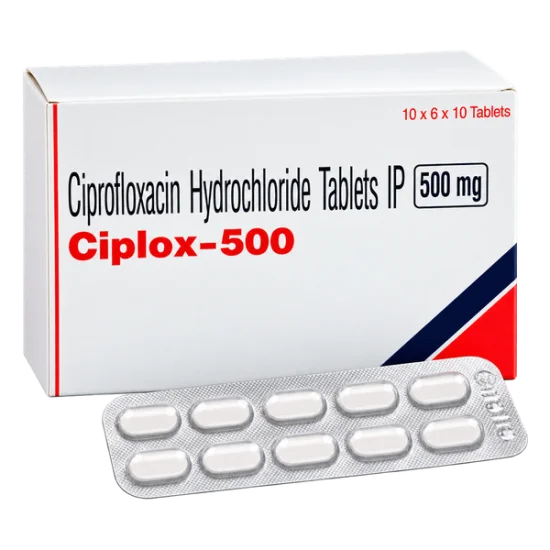
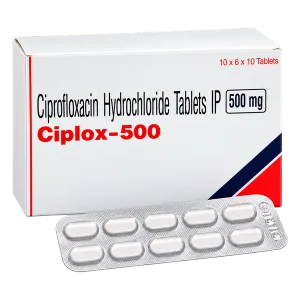
Ciplox is an oral ciprofloxacin antibiotic for susceptible bacterial infections when ciprofloxacin is clinically justified. Its dosing differs between strengths and users, and it works by blocking bacterial DNA replication.
Product information
Ciplox tablets contain ciprofloxacin hydrochloride, which provides the active antibiotic ciprofloxacin. Ciprofloxacin belongs to the fluoroquinolone class and acts against a range of Gram-negative and selected Gram-positive bacteria. The appropriate dose differs between strengths and between users, so there is no single amount that suits everyone.
Active ingredient and drug class
Ciprofloxacin is a synthetic antibacterial agent. Fluoroquinolones are bactericidal antibiotics, meaning they kill susceptible bacteria rather than simply slowing their growth.
The tablet is absorbed through the digestive tract. Absorption and treatment response can be affected by kidney function, antacid use, mineral supplements, infection severity, and the bacteria involved.
Mechanism of action
Ciprofloxacin inhibits bacterial DNA gyrase and topoisomerase IV. These enzymes help bacteria copy, repair, and organise their DNA. When the enzymes are blocked, bacterial DNA replication fails and the organism cannot continue multiplying.
This mechanism differs from that of beta-lactam antibiotics, which interfere mainly with bacterial cell-wall construction. It also differs from macrolides, which act on bacterial protein production. The mechanism and resistance profile influence whether ciprofloxacin is an appropriate choice for a particular infection.
Therapeutic indications
Ciplox is prescribed for susceptible bacterial infections for which oral ciprofloxacin is clinically justified. The exact indication depends on the infection site, local resistance patterns, culture results, kidney function, and the patient’s medical history.
Possible clinical uses include:
- Complicated urinary tract infections and kidney infections.
- Certain bacterial gastrointestinal infections.
- Selected respiratory, skin, bone, joint, or abdominal infections when ciprofloxacin is appropriate.
- Infections caused by susceptible Gram-negative bacteria, including some organisms with limited sensitivity to other antibiotic classes.
- Specific infections where culture testing identifies ciprofloxacin susceptibility.
Ciprofloxacin is not a general-purpose treatment for every bacterial infection. It is also not suitable for routine treatment of uncomplicated infections when a narrower antibiotic is preferred.
The World Health Organization, NICE, and the Centers for Disease Control and Prevention (CDC) place fluoroquinolones among antibiotics that require careful stewardship because resistance and serious class-related reactions can occur [1].
How it affects the body
Ciprofloxacin inhibits bacterial DNA gyrase and topoisomerase IV. These enzymes help bacteria copy, repair, and organise their DNA. When the enzymes are blocked, bacterial DNA replication fails and the organism cannot continue multiplying.
This mechanism differs from that of beta-lactam antibiotics, which interfere mainly with bacterial cell-wall construction. It also differs from macrolides, which act on bacterial protein production. The mechanism and resistance profile influence whether ciprofloxacin is an appropriate choice for a particular infection.
When not to use it
Ciplox is not suitable for everyone. This medication is not for you if you have had a serious allergic reaction to ciprofloxacin, another fluoroquinolone, or a relevant component of the tablet.
Particular caution is required with:
- Previous tendon inflammation or tendon rupture linked to a quinolone.
- Epilepsy or a condition that lowers the seizure threshold.
- Aortic aneurysm or a known risk of aortic disease.
- Myasthenia gravis.
- Significant kidney impairment.
- Heart rhythm disorders or a prolonged QT interval.
- Previous severe mental-health or neurological reactions to fluoroquinolones.
- Diabetes treated with glucose-lowering medicines.
- Pregnancy or breastfeeding, where the expected benefit must justify exposure.
- Treatment with medicines that interact with ciprofloxacin.
Ciprofloxacin must not be combined with tizanidine because the interaction can cause marked hypotension, sedation, and impaired psychomotor function. Extra caution applies with warfarin, theophylline, some antiarrhythmics, corticosteroids, medicines affecting the QT interval, and drugs that lower blood glucose.
When this is not for you
Severe allergy can involve swelling of the lips or throat, breathing difficulty, widespread rash, or collapse. These symptoms require urgent medical attention.
Possible side effects
Common reactions may include nausea, diarrhoea, abdominal discomfort, headache, dizziness, insomnia, or changes in taste. Some people experience increased sensitivity to sunlight. Mild symptoms can occur early in treatment and may settle, but worsening or persistent reactions need clinical review.
Fluoroquinolone treatment has specific serious risks:
- Tendon pain, swelling, or rupture, especially in the Achilles tendon.
- Numbness, burning, tingling, weakness, or altered sensation from peripheral neuropathy.
- Severe anxiety, confusion, hallucinations, agitation, or sleep disturbance.
- Marked changes in blood glucose.
- Palpitations, fainting, or other symptoms suggesting an abnormal heart rhythm.
- Severe or persistent watery or bloody diarrhoea.
- Serious allergic reactions.
- Rare inflammation or weakening of the aorta in people at risk.
Stop strenuous exercise and seek urgent medical assessment if tendon pain or swelling develops. Tendon injury can occur during treatment or after the course has finished. The risk increases with older age, corticosteroid use, kidney disease, and previous tendon problems.
Antibiotics can also disturb normal bacterial balance. Persistent diarrhoea may indicate antibiotic-associated colitis, including infection with Clostridioides difficile. Fungal overgrowth is possible after antibiotic exposure, although it is not an expected benefit or purpose of treatment.
A 2024 safety communication from the European Medicines Agency describes the need for careful use of systemic fluoroquinolones because some disabling reactions may be prolonged or irreversible [3].
Ingredients
Ciplox tablets contain ciprofloxacin hydrochloride, which provides the active antibiotic ciprofloxacin. Ciprofloxacin belongs to the fluoroquinolone class and acts against a range of Gram-negative and selected Gram-positive bacteria. The appropriate dose differs between strengths and between users, so there is no single amount that suits everyone.
Ciplox is used for bacterial infections in adults when the causative organism is susceptible and a fluoroquinolone is considered suitable. It does not treat viral illnesses such as influenza or most uncomplicated colds.
Dosage and administration
Dosage and administration
The appropriate dose differs between strengths and between users, so there is no single amount that suits everyone. A prescriber selects the regimen according to the infection, bacterial susceptibility, kidney function, age, interactions, and clinical severity.
Typical administration principles include:
- Take Ciplox by mouth with water.
- Swallow the tablet whole unless a prescriber has given different instructions.
- Take doses at evenly spaced times.
- Complete the prescribed course unless a clinician changes or stops it because of a serious reaction.
- Take ciprofloxacin separately from aluminium- or magnesium-containing antacids, sucralfate, iron, calcium, or zinc products because these can reduce absorption.
- Water is preferable to milk or yoghurt when taking the tablet.
- Do not take extra tablets to compensate for a missed dose.
The dosing schedule and treatment duration vary according to the infection, formulation, and patient factors. Some infections require a shorter course, while deeper or complicated infections need longer treatment.
The United States prescribing information describes ciprofloxacin regimens according to infection type and renal function rather than using one universal schedule [2].
Administration details and practical use
Use Ciplox exactly at the prescribed frequency. The tablet should be swallowed with a full glass of water. It may be taken with food, but avoid taking it at the same time as products containing polyvalent minerals.
- Take the prescribed tablet at the scheduled time.
- Swallow it with water.
- Keep mineral supplements and antacids separate from the dose.
- Continue treatment for the prescribed duration.
- Record any new tendon pain, numbness, severe diarrhoea, or unusual neurological symptoms.
If a dose is missed, take it when remembered unless the next scheduled dose is near. In that situation, skip the missed dose and continue with the normal schedule. Do not double the next dose.
The tablet should not be crushed or chewed unless a prescriber or dispensing pharmacist has specifically confirmed that this is suitable for the supplied product. Swallowing it whole helps maintain the intended oral dose and avoids an unpleasant bitter taste.
Comparison
Ciprofloxacin should be compared by antibacterial mechanism and clinical suitability, not by tablet strength alone.
| Antibiotic approach | Main pharmacological target |
|---|---|
| Ciprofloxacin | DNA gyrase and topoisomerase IV |
| Beta-lactam antibiotics | Bacterial cell-wall synthesis |
| Macrolide antibiotics | Bacterial protein synthesis |
A beta-lactam may be preferred for infections caused by susceptible organisms when its safety profile and tissue penetration are more suitable. A macrolide may be selected for certain respiratory pathogens or in people who cannot take particular beta-lactams. Ciprofloxacin may be chosen when the suspected or confirmed organism is susceptible and other options are unsuitable.
Ciprofloxacin has useful activity against several Gram-negative organisms, but it also has important limitations. Resistance can make it ineffective, and fluoroquinolones carry class warnings involving tendons, nerves, muscles, blood glucose, and the central nervous system. The narrowest suitable antibiotic is generally preferred when laboratory results support that choice.
Common mistakes
Several avoidable habits can reduce the benefit of Ciplox or increase risk:
- Taking the tablet with an aluminium- or magnesium-containing antacid.
- Swallowing it together with iron, zinc, or calcium supplements.
- Stopping as soon as fever or pain improves without a prescriber’s instruction.
- Taking two tablets after a missed dose.
- Ignoring tendon pain because it appears mild.
- Continuing strenuous sport after Achilles or shoulder pain begins.
- Using leftover Ciplox for a new illness.
- Combining it with tizanidine.
- Failing to mention corticosteroid treatment or a previous tendon injury.
- Treating a viral cold with an antibiotic.
- Driving or operating machinery after dizziness or marked drowsiness develops.
A bitter taste after chewing the tablet is not a reason to take another dose. The replacement dose could create unnecessary exposure.
What doctors say
In clinical practice, physicians usually reserve ciprofloxacin for infections where its antibacterial coverage provides a clear advantage. The medicine can be useful, but a broader antibiotic is not automatically a better antibiotic.
A doctor will usually consider the infection site, urine or other culture results, previous antibiotic exposure, kidney function, allergy history, tendon risks, and interacting medicines before selecting Ciplox. The dose may change when kidney clearance is reduced. NICE antimicrobial guidance also emphasizes matching antibiotic selection to the suspected infection and test results. Culture results can support a narrower treatment choice when the organism is susceptible. A medication review can identify interactions before the first dose.
One practical point often missed is the difference between bacterial susceptibility and symptom improvement. Pain or fever may improve before the infection has been fully treated, while resistant bacteria may cause symptoms to persist despite correct tablet-taking.
Another common clinical observation concerns mineral supplements. People may report “treatment failure” when the actual problem is simultaneous use of iron, calcium, magnesium, or antacids, which can reduce ciprofloxacin absorption.
The WHO AWaRe antibiotic book describes antibiotic selection, dosing principles, and stewardship considerations for common infections [1].
Common questions
Can Ciplox be taken with antacids, vitamins, or mineral supplements?
Ciplox should not be taken at the same time as aluminium, magnesium, iron, calcium, zinc, or sucralfate products because they can bind ciprofloxacin and reduce absorption. The FDA prescribing information available in 2024 describes this interaction and recommends separating administration times . Ordinary water does not create this mineral-binding problem. Ask for a specific schedule if you use several supplements or medicines each day.
What should be done after a missed Ciplox dose?
Take the missed tablet when remembered unless the next dose is due soon. If the next dose is near, skip the missed tablet and return to the regular schedule. The 2024 FDA product information advises against taking extra doses to compensate for a missed dose . Doubling can increase adverse effects without restoring the intended treatment schedule.
Is Ciplox suitable during pregnancy or breastfeeding?
Ciprofloxacin is used during pregnancy only when the expected benefit justifies the potential risk and a suitable alternative is not preferred. It passes into human milk, so breastfeeding decisions depend on the infection, treatment alternatives, and infant considerations. EMA reproductive-safety information reviewed in 2024 supports an individual assessment rather than automatic use or automatic avoidance . Report pregnancy, planned pregnancy, or breastfeeding before treatment begins.
Can the Ciplox tablet be split, crushed, or chewed?
The tablet should generally be swallowed whole with water. Chewing can produce a strong bitter taste, while crushing may make accurate administration less convenient and can change how the dose is taken. The FDA information available in 2024 describes oral administration and interaction precautions but does not support treating a crushed tablet as a different dosage form . If swallowing is difficult, a clinician or dispensing pharmacist can select a suitable alternative formulation or administration plan.
How long does a Ciplox course last, and is long-term use acceptable?
Course length depends on the infection, bacterial susceptibility, kidney function, and clinical response. Some treatments are short, while complicated infections may require a longer prescribed course. Long-term or repeated use is not appropriate for self-treatment because resistance, tendon injury, nerve symptoms, severe diarrhoea, and other fluoroquinolone reactions can occur. WHO antimicrobial-stewardship guidance available in 2022 supports using these antibiotics only when the expected benefit justifies their risks .
Do you offer anonymous delivery?
Your order will be securely packed and shipped within 24 hours. This is exactly what your package will look like (images of an actual item sent). It has the size and look of a regular private letter (24x11x0.7 cm) and its contents cannot be seen.
Comparison
How Buyers Rate Ciplox
-
Daniel N., 61 Deira · Seven days 25 Oct 2026Rating: 4 out of 5I took Ciplox for a urinary infection and noticed the burning eased after a couple of days. The tablet was straightforward to swallow, and the full course fitted easily around my morning and evening routine.
-
Omar P., 62 Al Reem Island · Five days 5 Nov 2026Rating: 5 out of 5My symptoms improved steadily rather than overnight. I used water with each dose and kept my mineral supplement several hours away. By the end of the course, the infection symptoms had cleared.
-
Bilal, 41 Bur Dubai · Four days 15 Nov 2026Rating: 2.5 out of 5Ciplox did not improve the abdominal symptoms for me. I also developed loose stools and stopped taking further doses after speaking with my doctor, who arranged a different assessment.
-
Mohammed, 51 Fujairah · Seven days 22 Nov 2026Rating: 4 out of 5The urinary symptoms settled during the course, and I felt back to normal by the final days. I kept the tablets separate from my antacid after learning that timing could affect absorption.
Sources
- World Health Organization (2022). The WHO AWaRe Antibiotic Book
- U.S. Food and Drug Administration (2024). CIPRO (ciprofloxacin hydrochloride) tablets prescribing information
- European Medicines Agency (2018). Quinolone- and fluoroquinolone-containing medicinal products: referral assessment report
