
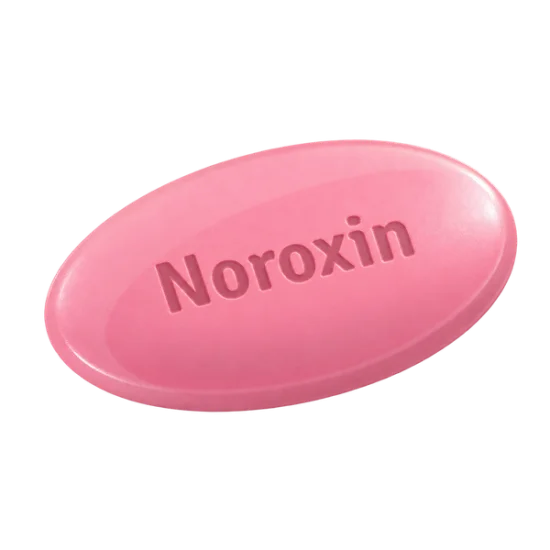
Noroxin
Active ingredient: Norfloxacin
Delivery: from 4 days
- Only original products
- Worldwide Delivery
- 24/7 Support
Noroxin tablets are taken by mouth, usually with water and away from meals or mineral supplements. They contain norfloxacin, a fluoroquinolone antibiotic prescribed for selected bacterial infections, including urinary tract and gastrointestinal infections. Noroxin acts against bacteria rather than viruses by blocking enzymes needed for bacterial DNA replication.
Product information
Norfloxacin is the generic name associated with Noroxin. It belongs to the fluoroquinolone class, which targets bacterial enzymes that maintain and copy DNA. This action stops susceptible bacteria from multiplying and allows the body to clear the infection.
Pharmacological Classification of Norfloxacin
Norfloxacin is the generic name associated with Noroxin. It belongs to the fluoroquinolone class, which targets bacterial enzymes that maintain and copy DNA. This action stops susceptible bacteria from multiplying and allows the body to clear the infection.
Unnecessary antibiotic exposure can cause side effects and encourages antimicrobial resistance, a concern addressed by the WHO in its antimicrobial-resistance guidance [1].
Therapeutic indications
Noroxin is used for selected infections caused by bacteria susceptible to norfloxacin. Urinary tract infections are a central indication because norfloxacin reaches the urinary system after oral administration. Certain bacterial gastrointestinal infections may also be treated when the causative organism and local prescribing guidance support its use.
Common clinical categories include:
- Complicated or uncomplicated urinary tract infections caused by susceptible bacteria.
- Bacterial gastroenteritis caused by susceptible organisms.
- Selected intestinal infections where fluoroquinolone treatment is clinically appropriate.
- Specific sexually transmitted bacterial infections only when the responsible clinician and local guidance support norfloxacin use.
The exact indication depends on the identified organism, infection site, resistance pattern, kidney function, and the local product information used by the prescriber. A urine culture may identify the bacterium and show whether it is susceptible to norfloxacin. This is useful when symptoms persist, recur, or occur after previous antibiotic exposure.
Norfloxacin should not be chosen for every episode of diarrhoea or urinary discomfort. Burning urination can arise from conditions that require a different treatment, and diarrhoea may be viral, inflammatory, or caused by a toxin rather than a bacterium.
Treatment Response and Infection Control
Fever, urinary discomfort, frequency, abdominal cramps, or diarrhoea may begin to settle once the susceptible bacteria are controlled. Symptoms that worsen, return soon after treatment, or remain unchanged require reassessment because resistance, an incorrect diagnosis, or a complication may be present.
Do not use leftover tablets for a later illness. The same symptom can have a different cause the next time.
How it affects the body
Norfloxacin enters susceptible bacterial cells and inhibits DNA gyrase and topoisomerase IV. These enzymes control the coiling, cutting, and repair of bacterial DNA during cell division. When the enzymes are blocked, bacterial chromosomes cannot be copied or separated correctly, leading to loss of bacterial growth and cell death.
DNA gyrase is more prominent in many Gram-negative bacteria, while topoisomerase IV helps separate duplicated chromosomes. Fluoroquinolones act on both targets, although the balance differs between bacterial species. This explains why laboratory susceptibility testing can matter when an infection does not improve as expected.
Noroxin does not work by lowering fever directly. Symptoms improve as the bacterial burden falls and inflammation settles.
The mechanism also explains why Noroxin cannot treat a viral cold. Viruses use different biological processes and do not provide the bacterial DNA-enzyme targets required for norfloxacin to act.
The FDA prescribing information for norfloxacin describes its antibacterial activity and the serious class warnings associated with fluoroquinolones [2]. Tendons, nerves, muscles, joints, and the central nervous system can be affected in susceptible people, so symptom recognition matters from the first doses.
When not to use it
Noroxin is not suitable for everyone. This medication is not for you if you have had a serious allergic reaction to norfloxacin or another quinolone, or if a previous fluoroquinolone caused a severe tendon, nerve, or neurological reaction.
Conditions Requiring Avoidance or Specialist Review
Specific situations requiring avoidance or careful clinical review include:
- Previous tendon disorder linked to a quinolone or fluoroquinolone.
- Myasthenia gravis, because muscle weakness can worsen.
- Significant kidney impairment, which may require a different regimen or antibiotic.
- A known heart-rhythm disorder or use of medicines that prolong the QT interval.
- Pregnancy or breastfeeding unless the prescriber determines that use is justified.
- A history of seizures or conditions that lower the seizure threshold.
- Aortic aneurysm or major risk factors for aortic disease, where fluoroquinolone risks require careful consideration.
- Children and adolescents, unless a specialist indication applies.
People receiving corticosteroids have a higher risk of tendon injury. The combination deserves careful review before treatment begins.
Important Interactions
Antacids containing aluminium or magnesium, iron supplements, zinc products, calcium supplements, and some fortified drinks can bind norfloxacin in the digestive tract. This reduces absorption and may lower antibacterial exposure. Separate these products according to the prescribing instructions rather than taking them together.
Warfarin and related anticoagulants may require closer monitoring because antibiotic treatment can alter anticoagulant response. Some medicines for heart rhythm, diabetes, seizures, inflammation, or mental health can also change the risk profile. A full medicine list should include prescription drugs, over-the-counter products, vitamins, minerals, and herbal preparations.
When this is not for you
Do not take Noroxin without medical review if you have previously reacted badly to a quinolone antibiotic, have a history of serious tendon or nerve problems after fluoroquinolone treatment, or have a condition that can make muscle weakness, seizures, heart-rhythm problems, or aortic disease more dangerous. Tell the prescriber if you are pregnant, breastfeeding, under 18, taking corticosteroids, or using medicines for heart rhythm, blood clotting, seizures, diabetes, or mental health.
Possible side effects
Norfloxacin can cause mild reactions such as nausea, abdominal discomfort, loose stools, headache, dizziness, or sleep disturbance. These effects may be temporary, but persistent diarrhoea can signal antibiotic-associated colitis and should not be treated casually with self-selected anti-diarrhoeal products.
Fluoroquinolones also have less common reactions that deserve rapid attention:
- Tendon pain, swelling, stiffness, or a sudden snapping sensation.
- Tingling, burning, numbness, reduced sensation, or weakness.
- Severe muscle or joint pain.
- Palpitations, fainting, or an irregular heartbeat.
- Confusion, agitation, hallucinations, seizures, or marked changes in mood.
- Facial swelling, wheezing, widespread rash, or difficulty breathing.
- Severe watery or bloody diarrhoea during treatment or after completion.
Tendon injury can involve the Achilles tendon, shoulder, hand, or other sites. The risk is higher in older adults, people with kidney impairment, people receiving corticosteroids, and those with a previous tendon disorder. A tendon problem can begin during treatment or after the course has finished.
One practical detail concerns urine testing. Norfloxacin may be associated with laboratory-test changes, and an infection itself can alter urine findings. Tell the clinician interpreting a test that Noroxin has been used, especially when symptoms and laboratory results do not match.
Sun sensitivity can occur with some fluoroquinolones. Use sensible sun protection and limit intense exposure if the skin becomes unusually reactive. Severe blistering or a rapidly spreading rash needs urgent assessment.
Ingredients
Noroxin tablets contain norfloxacin, a fluoroquinolone antibiotic prescribed for selected bacterial infections, including urinary tract and gastrointestinal infections.
Dosage and administration
The dose of Noroxin is decided individually, taking age, other medicines, kidney function, and health conditions into account. Use the prescribed amount and schedule for the infection being treated. The course length also depends on the infection, its severity, the organism, and local prescribing guidance.
Key administration principles include:
- Swallow the tablet with water.
- Take doses at evenly spaced times to maintain antibacterial exposure.
- Take Noroxin away from meals when directed by the prescribing information.
- Separate it from antacids and mineral products containing aluminium, magnesium, calcium, iron, or zinc.
- Complete the prescribed course unless a serious reaction requires immediate medical action.
- If a dose is missed, take it when remembered unless the next scheduled dose is near; do not double the next dose.
Stopping as soon as symptoms improve can leave surviving bacteria behind. Those bacteria may multiply again and may be harder to treat. Continuing despite severe tendon pain, tingling, numbness, severe weakness, or an allergic reaction is also unsafe; these symptoms require prompt medical attention rather than another dose.
Administration with Food and Fluids
Norfloxacin absorption can be reduced by food and by mineral-containing products. Follow the timing prescribed for the product and take each tablet with water rather than milk or a fortified nutritional drink. Adequate fluids support hydration, especially when infection causes fever, vomiting, diarrhoea, or reduced intake.
A useful detail is easy to miss: calcium may be present in products that are not marketed as supplements, including some antacid preparations and nutritional beverages. Check the active ingredients of any product used for indigestion or mineral replacement before combining it with Noroxin.
Comparison
Noroxin belongs to a different antibiotic family from the commonly used alternatives below. Selection depends on the infection site, culture results, allergy history, kidney function, pregnancy status, resistance patterns, and local guidance.
| Treatment approach | Main target or feature | Practical limitation |
|---|---|---|
| Noroxin — norfloxacin | Bacterial DNA gyrase and topoisomerase IV | Fluoroquinolone-class tendon, nerve, heart-rhythm, and central-nervous-system warnings |
| Nitrofurantoin | Concentrated antibacterial activity in urine | Mainly suited to lower urinary infections; kidney function affects suitability |
| Trimethoprim-based therapy | Interferes with bacterial folate metabolism | Resistance, allergy, kidney effects, and medicine interactions can limit use |
Norfloxacin may be considered when the suspected or confirmed organism is susceptible and the infection site is appropriate. Nitrofurantoin is often selected for certain lower urinary infections because its activity is concentrated in urine, while trimethoprim-based treatment works through a different bacterial pathway.
These options are not interchangeable by tablet count or symptom similarity. A urinary infection involving the kidneys, recurrent infection, fever, pregnancy, or systemic illness needs a different clinical assessment from uncomplicated bladder symptoms. Guidance from the European Medicines Agency places strong restrictions on fluoroquinolone use when the potential harms outweigh the expected benefit [3].
Common mistakes
Several everyday errors can reduce treatment quality or increase adverse effects:
- Taking the tablet with milk, a calcium-fortified drink, or an antacid.
- Taking iron, zinc, magnesium, or calcium at the same time.
- Doubling the next dose after forgetting one.
- Stopping when urinary burning or diarrhoea improves.
- Continuing exercise after tendon pain appears.
- Using leftover tablets for a new illness.
- Treating severe antibiotic-associated diarrhoea with self-selected anti-diarrhoeal medicine.
- Failing to mention corticosteroids, anticoagulants, or medicines affecting heart rhythm.
- Assuming that all diarrhoea requires an antibiotic.
- Ignoring tingling, numbness, weakness, or new palpitations.
A frequent misconception is that a stronger feeling of nausea means the antibiotic is working better. Side-effect intensity does not measure antibacterial activity.
Another mistake is taking Noroxin close to a morning mineral supplement and then blaming the antibiotic when symptoms persist. The interaction can be avoidable when the daily schedule is planned before treatment starts.
What doctors say
In clinical practice, doctors usually judge Noroxin by three factors: whether the infection is bacterial, whether the organism is susceptible, and whether the patient has risk factors for fluoroquinolone toxicity. A broad symptom label such as “urine infection” does not answer all three questions.
A prescriber may request urine culture, kidney-function testing, or other investigations when symptoms are severe, recurrent, or atypical. Fever with flank pain, vomiting, confusion, or marked weakness can indicate a more serious infection that needs prompt assessment.
Doctors also expect patients to report new tendon pain, numbness, palpitations, severe diarrhoea, or allergic symptoms quickly. Continuing the course without reporting these effects can increase harm, while stopping without a replacement plan can leave the infection undertreated.
MOHAP provides the regulatory framework for medicines in the United Arab Emirates, while international antibiotic stewardship principles from WHO support targeted treatment and avoidance of unnecessary fluoroquinolone exposure. The clinical trade-off is clear: Noroxin can be useful for susceptible infections, yet its class-specific risks make indiscriminate use unsuitable.
Common questions
What is the best time of day to take Noroxin?
The best time is the schedule prescribed for the infection, taken at evenly spaced intervals and separated from mineral products. Noroxin is generally taken by mouth with water and away from meals when directed by its prescribing information. FDA fluoroquinolone safety information reviewed in 2025 continues to support careful scheduling and prompt reporting of serious reactions [4]. A regular routine, such as linking doses with non-mineral daily activities, can reduce missed doses without changing the prescribed timing. Keep doses at consistent times from day to day.
Can Noroxin be taken with food or on an empty stomach?
Norfloxacin absorption can fall when it is taken with food or mineral-containing products. Take it according to the prescribed timing, with water, and keep calcium, magnesium, aluminium, iron, and zinc products separated. EMA fluoroquinolone information reviewed in 2025 continues to emphasise administration details and class-specific precautions. Milk, fortified drinks, and some indigestion remedies can contain minerals even when they are not presented as supplements.
Can Noroxin cause tendon pain?
Yes. Tendon pain, swelling, stiffness, or rupture is a recognised fluoroquinolone risk, and the Achilles tendon is a common site. FDA safety information current to 2025 identifies increased risk in older adults, people with kidney disease, and people taking corticosteroids. Stop strenuous activity and seek urgent clinical advice if new tendon symptoms develop; do not massage the painful area and continue exercise as normal.
Can alcohol be used while taking Noroxin?
Alcohol is best avoided during treatment because it can worsen dizziness, nausea, sleep disturbance, and impaired concentration. It can also make it harder to recognise whether weakness, confusion, or gastrointestinal symptoms are caused by the infection or the medicine. WHO antimicrobial-use principles from 2024 support avoiding behaviours that complicate treatment monitoring. Alcohol does not improve norfloxacin activity and should not be used to help swallow the tablet.
Do you offer anonymous delivery?
Your order will be securely packed and shipped within 24 hours. This is exactly what your package will look like (images of an actual item sent). It has the size and look of a regular private letter (24x11x0.7 cm) and its contents cannot be seen.
Comparison
How Buyers Rate Noroxin
-
Imran, 50 Madinat Zayed 25 Oct 2026Rating: 4.5 out of 5I took the prescribed dose of Noroxin for the prescribed duration and noticed the burning and constant urgency had settled within the treatment period. I kept the tablets separate from my mineral supplement and was satisfied with the result.
-
Omar B., 26 Dubai Marina 4 Nov 2026Rating: 3.5 out of 5I took the prescribed dose of Noroxin for the prescribed duration. It helped with the infection, although my stomach felt unsettled for the first few days. I took it with water and kept my antacid several hours away, which made the routine easier.
-
Mark, 37 Al Khawaneej 13 Nov 2026Rating: 5 out of 5I took the prescribed dose of Noroxin for the prescribed duration, and the urinary symptoms improved clearly after I started the prescribed course. I used phone reminders because the doses were easy to forget during work, and the treatment fitted into my day better than expected.
-
Joseph Z., 47 Jebel Ali 21 Nov 2026Rating: 4 out of 5I took the prescribed dose of Noroxin for the prescribed duration, and it resolved the bacterial infection for me. I drank water with each tablet and finished the course instead of stopping when I first felt better.
Sources
- World Health Organization (2015). Global action plan on antimicrobial resistance.
- U.S. Food and Drug Administration (2018). Fluoroquinolone Antibacterial Drugs: Drug Safety Communication.
- European Medicines Agency (2019). Quinolone- and fluoroquinolone-containing medicinal products.
- U.S. Food and Drug Administration (2018). Norfloxacin (Noroxin) prescribing information.
