
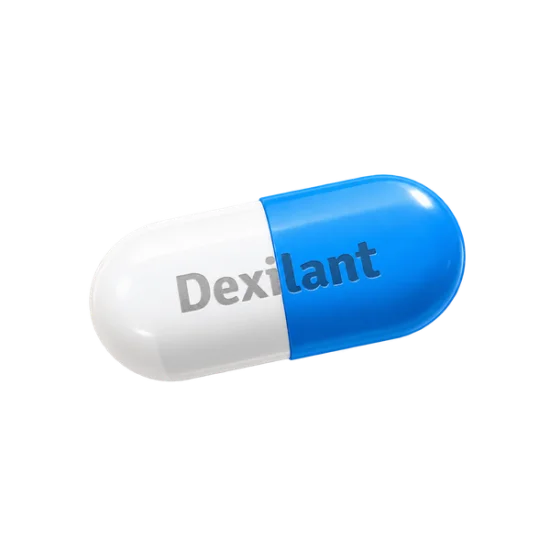
Dexilant
Active ingredient: Dexlansoprazole
Delivery: from 4 days
- Only original products
- Worldwide Delivery
- 24/7 Support
Dexilant is used for gastroesophageal reflux disease (GERD), heartburn, and healing erosive esophagitis. It contains dexlansoprazole, a proton pump inhibitor that reduces stomach-acid production. Its delayed-release capsule design provides acid suppression through two release phases.
Product information
Dexilant contains dexlansoprazole, a proton pump inhibitor (PPI). Dexlansoprazole is the R-enantiomer of lansoprazole, meaning the molecules share the same chemical formula but differ in three-dimensional arrangement. This structure influences how the body absorbs and processes the active ingredient.
Therapeutic indications
Dexilant is prescribed for acid-related upper gastrointestinal conditions. The main uses include:
- Healing all grades of erosive oesophagitis.
- Maintaining healing after erosive oesophagitis has improved.
- Relieving heartburn associated with symptomatic non-erosive GERD.
- Treating GERD-related symptoms when stomach acid is contributing to irritation.
Erosive oesophagitis occurs when repeated acid exposure damages the lining of the oesophagus. Non-erosive GERD can cause similar symptoms without visible erosions on examination.
The FDA prescribing information identifies dexlansoprazole as a treatment for erosive oesophagitis and symptomatic GERD [1]. Clinical treatment may involve an initial healing phase followed by a maintenance phase. The diagnosis guides the initial treatment choice. The dose and duration are selected according to the condition being treated, the severity of symptoms, and the individual response. Follow-up determines whether the regimen needs adjustment.
How it affects the body
Mechanism of acid suppression
Dexlansoprazole blocks the gastric proton pump, also called the hydrogen-potassium ATPase, in acid-producing stomach cells. The proton pump is the final step in stomach-acid secretion. By inhibiting it, Dexilant reduces the amount of acid entering the stomach and oesophagus.
Lower acid exposure gives inflamed oesophageal tissue time to heal. It can also reduce acid-related burning and regurgitation associated with GERD.
When not to use it
Dexilant is contraindicated in people with hypersensitivity to dexlansoprazole, other substituted benzimidazoles, or an excipient in the formulation. A history of a serious reaction to another proton pump inhibitor requires careful evaluation before use.
Specific situations requiring medical review include:
- Previous anaphylaxis, angioedema, or severe rash after a PPI.
- Current use of dasatinib.
- Digoxin treatment.
- Significant kidney or liver disease.
- Recurrent low magnesium.
- Long-term use of diuretics.
- Pregnancy or breastfeeding.
- Persistent unexplained weight loss, vomiting, anaemia, or difficulty swallowing.
- Black stools, vomiting blood, or sudden severe chest or abdominal pain.
Dexilant can mask symptoms from an underlying condition. Alarm symptoms should be investigated rather than treated indefinitely with acid suppression.
NICE guidance addresses the assessment and management of gastro-oesophageal reflux disease, including treatment review and patient-specific factors [2].
When this is not for you
Dexilant is not suitable for you if you have had a serious allergic reaction to dexlansoprazole, lansoprazole, another related PPI, or an ingredient in the capsule. It also requires careful review if you use a medicine whose absorption depends strongly on stomach acidity.
Possible side effects
The commonly reported adverse effects of dexlansoprazole include:
- Diarrhoea.
- Abdominal pain.
- Nausea.
- Vomiting.
- Flatulence.
- Headache.
- Upper respiratory symptoms.
These effects are often mild, but persistent diarrhoea deserves attention because proton pump inhibitor treatment can increase susceptibility to Clostridioides difficile infection. Watery or severe diarrhoea, fever, or abdominal cramping requires prompt medical assessment.
Allergic reactions are uncommon but may include rash, facial swelling, wheezing, or difficulty breathing. Severe skin blistering, widespread rash, or swelling of the lips and tongue requires urgent care.
Long-term acid suppression may reduce magnesium levels, especially in people also taking diuretics or digoxin. Muscle cramps, tremor, palpitations, seizures, or marked weakness need urgent assessment.
One practical detail is easy to miss: symptom relief does not always mean that oesophageal inflammation has fully healed. Treatment duration is based on the diagnosed condition, not only on how quickly heartburn settles.
Another detail concerns rebound symptoms. Stopping prolonged acid suppression suddenly can lead to temporary acid-related symptoms in some people. The treatment plan may need a gradual reduction when clinically appropriate.
Ingredients
Dexilant capsules use dual delayed-release technology. The active ingredient is released in two separate phases after the capsule passes through the stomach. This helps maintain acid suppression over a longer period than a single-release formulation.
Dosage and administration
Dexilant is taken orally. The amount per intake, frequency, and treatment duration are set individually for each person.
- Swallow the capsule whole with water when possible.
- Take it at the time directed by the prescriber.
- It may be taken with or without food.
- Do not crush or chew the capsule or its granules.
- If a dose is missed, take it when remembered unless the next scheduled dose is near.
- Do not take two doses together to compensate for a missed dose.
- Complete the prescribed treatment period, especially when Dexilant is being used to heal erosive oesophagitis.
For people who cannot swallow capsules, the delayed-release granules may be administered with a small amount of applesauce or through an oral syringe using the method specified in the prescribing information. The granules must not be crushed or chewed.
The amount per intake is selected for the individual treatment plan rather than being one fixed amount. The correct regimen depends on the diagnosis, response, age, liver function, and other medicines being taken.
Comparison
Dexilant is an oral, single-ingredient proton pump inhibitor for acid-related conditions. Its delayed-release capsule uses two release phases to provide acid suppression, distinguishing its delivery design from approaches with a single release phase.
Common mistakes
Several habits can reduce the benefit of Dexilant or increase avoidable risk:
- Crushing or chewing the delayed-release granules.
- Taking an extra capsule because heartburn has not settled immediately.
- Combining Dexilant with frequent antacids without reviewing the complete treatment plan.
- Stopping after the first symptom-free days during a healing course.
- Treating severe or recurring symptoms without investigating alarm signs.
- Forgetting to mention digoxin, dasatinib, iron, sucralfate, or methotrexate.
- Assuming a stronger capsule is always preferable for maintenance.
- Taking a missed dose together with the next scheduled dose.
Acid suppression may also change how some diagnostic tests are interpreted. If testing for Helicobacter pylori is planned, the treating clinician may adjust acid-suppressing therapy before testing because PPIs can affect results.
What doctors say
In clinical practice, physicians usually separate symptom control from tissue healing. Heartburn may improve before erosive oesophagitis has recovered, so stopping treatment as soon as the burning decreases can lead to incomplete healing.
A prescriber also reviews whether symptoms are truly acid-related. Chest pain, swallowing difficulty, unexplained anaemia, repeated vomiting, or unintended weight loss may point to a condition needing investigation.
The WHO recognises proton pump inhibitors as important medicines for appropriate acid-related disorders [3]. The American College of Gastroenterology recommends matching treatment duration to the clinical indication [4]. Doctors usually aim for the lowest regimen that maintains control after healing has been achieved.
Patients often make one timing mistake: they move doses around from day to day because symptoms fluctuate. Dexilant can be taken with or without food, but using it at a consistent time makes the treatment easier to follow and assess.
Common questions
What is the best time of day to take Dexilant?
Dexilant may be taken at any time of day, with or without food, provided it is used according to the prescribed schedule. The FDA prescribing information revised in 2022 supports flexible administration in relation to meals . Taking it at a consistent time can make missed doses less likely and helps the prescriber judge the response accurately.
Can Dexilant cause diarrhoea?
Diarrhoea is a recognised adverse effect of Dexilant and other proton pump inhibitors. The FDA listed diarrhoea among reported reactions in the prescribing information revised in 2022 . Mild short-lived symptoms may settle, but frequent watery stools, fever, blood, or significant abdominal pain require prompt medical attention because intestinal infection is possible.
Can Dexilant capsules be split, crushed, or chewed?
Dexilant capsules should not be crushed or chewed because the granules use a delayed-release design. The FDA-approved administration instructions describe swallowing the capsule whole or using specific granule-delivery methods when swallowing is difficult . A capsule should not be divided casually, since uneven separation can affect how much medicine is taken and how it is released.
Can Dexilant be taken with food or on an empty stomach?
Dexilant can be taken with or without food. This flexible meal relationship is part of the product’s administration instructions in the FDA prescribing information revised in 2022 . Food does not remove the need to follow the individual schedule, and taking extra doses after a heavy meal is not an appropriate way to manage breakthrough symptoms.
Is Dexilant suitable for people under 18?
Use in children and adolescents depends on the patient’s age, diagnosis, formulation, and prescriber’s assessment. The FDA paediatric information for dexlansoprazole, revised in 2022, should guide age-specific decisions rather than adult treatment being copied automatically . A young person with persistent reflux, vomiting, swallowing difficulty, or poor weight gain needs assessment of the cause as well as symptom treatment.
Which condition rules out Dexilant?
A previous serious hypersensitivity reaction to dexlansoprazole, lansoprazole, another substituted benzimidazole, or a capsule ingredient rules out Dexilant. The EMA product information for proton pump inhibitors, dated 2022, describes hypersensitivity as a contraindication . People taking dasatinib also require a different treatment decision because reduced stomach acidity can lower dasatinib absorption.
Which symptoms mean stopping Dexilant and seeking urgent medical help?
Urgent symptoms include facial or throat swelling, breathing difficulty, blistering skin, vomiting blood, black stools, severe watery diarrhoea, fainting, or sudden severe abdominal pain. The FDA safety information revised in 2022 treats severe allergic reactions and serious gastrointestinal symptoms as reasons for urgent assessment . New difficulty swallowing, progressive chest pain, or unexplained weight loss also requires prompt medical review rather than continued self-treatment.
Can Dexilant affect concentration, driving, or machinery work?
Dexilant is not generally used as a sedating medicine, but dizziness, headache, or visual symptoms can occur. The EMA product information from 2022 advises caution when an adverse effect could impair alertness or coordination . Do not drive or operate machinery until you know how the medicine affects you, especially after starting treatment or changing the regimen.
Do you offer anonymous delivery?
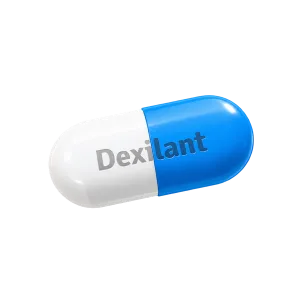
Your order will be securely packed and shipped within 24 hours. This is exactly what your package will look like (images of an actual item sent). It has the size and look of a regular private letter (24x11x0.7 cm) and its contents cannot be seen.
Comparison
How Buyers Rate Dexilant
-
Hassan, 49 Al Majaz 25 Oct 2026Rating: 3.5 out of 5I used Dexilant for reflux that had been disturbing my sleep. The burning improved after the first couple of weeks, although I still had occasional loose stools at the beginning. The benefit was clear, but I needed to pay attention to my digestion.
-
Ali, 33 Al Qusais 6 Nov 2026Rating: 5 out of 5I took Dexilant for persistent heartburn and found it easier to manage meals and work without the usual burning. The improvement was gradual rather than immediate, but by the end of the treatment period I felt much more comfortable.
-
Bilal, 36 Dubai 9 Nov 2026Rating: 4.5 out of 5Dexilant reduced the acid taste and night-time discomfort I had been dealing with for months. I took the capsule consistently and did not need to rely on antacids as often. That made the treatment feel practical for my routine.
-
Ramon, 64 Liwa 17 Nov 2026Rating: 4 out of 5My reflux symptoms became much less intrusive after starting Dexilant. I could sleep more comfortably and eat ordinary meals with fewer problems. The delayed-release capsule was straightforward to use as long as I swallowed it whole.
-
Faisal D., 40 Al Dhaid 21 Nov 2026Rating: 3.5 out of 5Dexilant helped with the burning, but the improvement took longer than I expected. I also noticed mild nausea for a short time, so I discussed it with my doctor before continuing. The result was useful, although it was not an instant change.
Sources
- U.S. Food and Drug Administration (2022). DEXILANT (dexlansoprazole) delayed-release capsules: Prescribing Information.
- National Institute for Health and Care Excellence (2014). Gastro-oesophageal reflux disease and dyspepsia in adults: investigation and management (CG184).
- World Health Organization (2023). WHO Model List of Essential Medicines, 23rd list.
- American College of Gastroenterology (2022). ACG Clinical Guideline for the Diagnosis and Management of Gastroesophageal Reflux Disease.
