
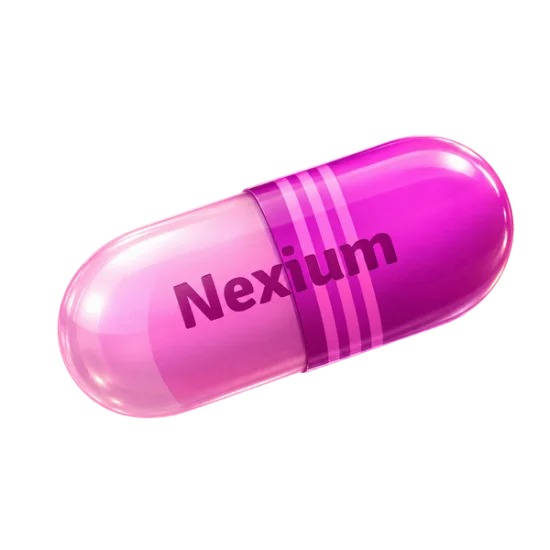
Nexium
Active ingredient: Esomeprazole
Delivery: from 4 days
- Only original products
- Worldwide Delivery
- 24/7 Support
Nexium is intended for adults with acid-related disorders such as gastroesophageal reflux disease. It helps relieve heartburn and support healing of acid-irritated tissue by reducing gastric acid.
Product information
Esomeprazole, the active ingredient of Nexium, is a proton pump inhibitor for adults with acid-related disorders such as gastroesophageal reflux disease. It reduces gastric acid by blocking the stomach’s final acid-secretion pathway, helping relieve heartburn and support healing of acid-irritated tissue.
Therapeutic indications
It is used for gastroesophageal reflux disease, erosive reflux oesophagitis, gastric and duodenal ulcer disease, and selected acid-hypersecretion disorders.
Acid reduction can relieve burning behind the breastbone and sour regurgitation. It also creates a less acidic environment that allows damaged oesophageal tissue to heal. Proton pump inhibitors are used as part of treatment plans for Helicobacter pylori eradication, but they are combined with antibiotics in that setting rather than used alone.
How it affects the body
Nexium works inside gastric parietal cells. These cells contain an enzyme called H⁺/K⁺-ATPase, commonly called the gastric proton pump. The pump exchanges hydrogen ions for potassium ions and releases hydrogen ions into the stomach, where they form hydrochloric acid.
After absorption, esomeprazole concentrates in the acidic secretory channels of parietal cells. It is converted into an active compound that binds to the proton pump and inhibits it. This blocks the final stage of acid secretion, including acid stimulated by food, gastrin, and vagal signals.
The effect lasts longer than the time esomeprazole remains in the bloodstream because the proton pump must be replaced before full acid secretion returns. New pumps are produced gradually by the stomach lining. Clinical information from the FDA describes this prolonged pharmacodynamic effect as a central feature of proton pump inhibitor treatment [1].
When this is not for you
NOT for you if: you have had a serious allergy to esomeprazole or another proton pump inhibitor, take rilpivirine, or have unexplained alarm symptoms awaiting assessment.
Possible side effects
Esomeprazole is tolerated by many patients, yet it can cause unwanted effects. Common reactions include headache, abdominal pain, diarrhoea, constipation, nausea, vomiting, and flatulence. These symptoms are often mild, though persistent or severe diarrhoea needs attention because proton pump inhibitors can be associated with Clostridioides difficile infection.
Some patients report bloating or a change in bowel habits during the first part of treatment. Others notice no adverse effects but still need to understand the risks of prolonged acid suppression. The FDA prescribing information lists headache, diarrhoea, abdominal pain, nausea, and constipation among recognised adverse reactions [2].
Seek urgent medical care for facial swelling, breathing difficulty, widespread blistering rash, fainting, severe skin peeling, or signs of a serious allergic reaction. New muscle cramps, marked weakness, tremor, confusion, or irregular heartbeat can occur with significant electrolyte disturbance and also require prompt assessment.
Long courses can rarely contribute to low magnesium, vitamin B12 deficiency, intestinal infections, and fractures in people with additional risk factors. Acute interstitial nephritis, an inflammatory kidney reaction, can occur at any time and may present with reduced urine, fever, rash, or unexplained fatigue.
Ingredients
Nexium contains esomeprazole, supplied as esomeprazole magnesium in delayed-release capsules. Esomeprazole belongs to the proton pump inhibitor class, which suppresses acid production more deeply than medicines that only neutralise acid already present in the stomach. It is used for gastroesophageal reflux disease, erosive reflux oesophagitis, gastric and duodenal ulcer disease, and selected acid-hypersecretion disorders.
Active Ingredient and Molecular Structure
Esomeprazole is the S-enantiomer of omeprazole. An enantiomer is one of two mirror-image forms of the same chemical structure. The distinction affects how the body processes the molecule, although both medicines act on the same gastric proton pump.
Nexium capsules are designed for delayed release. This protects esomeprazole from rapid breakdown in the acidic stomach and allows the active substance to reach the small intestine before absorption. The absorbed drug then reaches the acid-producing parietal cells through the bloodstream.
The pharmacological action is local to the acid-secreting machinery, while absorption occurs elsewhere. This is why the capsule should be swallowed intact rather than treated like an ordinary immediate-release tablet.
Dosage and administration
Nexium for this product page is supplied as oral capsules. The exact strength and regimen are selected before treatment begins with a healthcare professional, based on the diagnosis, age, symptom severity, response, and other medicines.
- Take the capsule by mouth at the prescribed frequency.
- Swallow it whole with water.
- Take it at the scheduled time each day.
- Do not chew or crush the capsule.
- If a dose is missed, take it when remembered unless the next scheduled dose is close.
- Do not take two doses together to compensate for a missed dose.
- Complete the prescribed course when Nexium is being used for healing or ulcer treatment.
Nexium is commonly taken before food because proton pumps become more active around meals, giving esomeprazole more active pumps to inhibit. The exact timing should follow the regimen selected for the individual condition. A person using it for ongoing reflux may have a different schedule from someone receiving treatment for ulcer healing or Helicobacter pylori infection.
Nexium also exists in clinical settings in forms such as oral granules and intravenous esomeprazole. Those presentations have separate instructions and are not interchangeable with the capsules described here. Intravenous treatment is reserved for specific clinical circumstances and is administered by trained healthcare staff.
Comparison
Nexium belongs to the proton pump inhibitor group. The closest medicines by mechanism include omeprazole, pantoprazole, rabeprazole, lansoprazole, and dexlansoprazole. H2-receptor antagonists, such as famotidine, work through a different pathway by blocking histamine H2 receptors on parietal cells.
| Treatment group | Main mechanism | Typical clinical role |
|---|---|---|
| Esomeprazole and other proton pump inhibitors | Inhibit H⁺/K⁺-ATPase, the final acid-secretion pathway | Frequent reflux, erosive oesophagitis, ulcer healing, acid hypersecretion |
| Famotidine and other H2-receptor antagonists | Reduce histamine-stimulated acid secretion | Intermittent or less severe acid-related symptoms |
| Calcium carbonate antacids | Neutralise acid already present in the stomach | Short-lived relief of occasional heartburn |
Omeprazole and esomeprazole act on the same proton pump. Esomeprazole is the S-enantiomer of omeprazole, while older omeprazole products contain a racemic mixture of mirror-image forms. Pantoprazole and rabeprazole also inhibit the proton pump but differ in metabolism, interaction profiles, and how clinicians use them in individual patients.
H2-receptor antagonists can act faster for some short-lived symptoms, yet their acid suppression is generally less sustained than that of a proton pump inhibitor. Antacids may provide rapid, temporary relief, but they do not heal acid-related inflammation or prevent acid secretion later in the day.
Treatment choice depends on symptom frequency, diagnosis, response, interaction risk, and the need for mucosal healing. Switching between acid suppressants without a clear reason can make it harder to judge whether symptoms reflect reflux, another gastrointestinal disorder, or an unrelated problem.
Common mistakes
Several routine errors reduce the benefit of acid suppression:
- Taking the capsule only after severe heartburn has started when a scheduled course was prescribed.
- Chewing or crushing the delayed-release dosage form.
- Taking a double dose after forgetting one.
- Stopping immediately after improvement when the course is intended to heal oesophageal inflammation or an ulcer.
- Continuing the medicine for months without reassessing the original indication.
- Treating chest pain as reflux without considering cardiac symptoms.
- Adding antacids, supplements, or herbal products without reviewing the full medication list.
- Ignoring persistent difficulty swallowing, vomiting, anaemia, black stools, or unintentional weight loss.
One easily missed detail is the difference between symptom relief and tissue healing. Burning may improve before oesophageal inflammation has fully recovered. Another is rebound acidity after prolonged use; temporary symptoms after stopping do not automatically prove that the original disease has returned.
What doctors say
In clinical practice, physicians generally use Nexium when acid suppression needs to be stronger or more sustained than occasional antacid treatment can provide. The treatment target may be symptom control, healing of oesophagitis, prevention of ulcer recurrence, or protection during selected high-risk treatment plans.
Doctors usually judge response by more than the first day of symptom relief. Night-time symptoms, swallowing discomfort, regurgitation, rescue medicine use, and recurrence after missed doses can all help identify whether the regimen is working.
A clinician would also question unexplained long-term continuation. If symptoms have resolved, the next step may be a lower-intensity plan, intermittent treatment, or supervised discontinuation, depending on the original diagnosis. Abrupt stopping after prolonged use can produce rebound acid hypersecretion in some people, causing temporary worsening of heartburn.
Common questions
Can Nexium cause diarrhoea?
Yes. Diarrhoea is a recognised adverse effect of esomeprazole and may be mild and temporary. Persistent watery diarrhoea, fever, abdominal pain, or dehydration needs prompt medical assessment because acid suppression can be associated with intestinal infection. The FDA's 2022 product information lists diarrhoea among reported adverse reactions .
How does esomeprazole differ from omeprazole?
Both medicines inhibit the gastric H⁺/K⁺-ATPase proton pump and treat acid-related conditions. Esomeprazole is the S-enantiomer of omeprazole, while omeprazole is a racemic mixture of two enantiomers. Their clinical effects overlap, but metabolism, interaction potential, response, and prescribed regimen can differ between individuals. The European Medicines Agency (2021) recognises esomeprazole as a proton pump inhibitor with condition-specific use .
How soon can Nexium’s effect become noticeable?
Some people notice less heartburn after the first doses, while full control of reflux or healing of inflamed tissue may require longer treatment. Symptom response depends on the cause, severity, meal pattern, and whether the capsule is taken according to the prescribed schedule. NICE's 2014 guidance on dyspepsia and gastro-oesophageal reflux disease supports structured acid-suppression treatment with review of ongoing symptoms [3]. New swallowing difficulty, bleeding, persistent vomiting, or unexplained weight loss should not be managed by simply waiting for the medicine to work.
Can Nexium be combined with other medicines or supplements?
Nexium can interact with several medicine groups, including rilpivirine-containing antiretroviral treatment, atazanavir, nelfinavir, clopidogrel, warfarin, digoxin, tacrolimus, phenytoin, and high-dose methotrexate. Supplements such as St John’s wort can alter drug metabolism and should also be disclosed. WHO's 2017 medication-safety principles support reviewing the complete medicine and supplement list when treatment is started or changed [4]. The prescriber should decide whether a combination is suitable, whether timing must be separated, or whether another acid suppressant is preferable.
Do you offer anonymous delivery?
Your order will be securely packed and shipped within 24 hours. This is exactly what your package will look like (images of an actual item sent). It has the size and look of a regular private letter (24x11x0.7 cm) and its contents cannot be seen.
Comparison
Clinical Considerations for Long-Term Therapy
Long-term proton pump inhibitor therapy changes the stomach environment. Reduced acidity can affect the absorption of vitamin B12 from food and may alter intestinal bacterial patterns. The association with bone fractures is strongest in people who already have osteoporosis risks, older age, poor nutrition, or prolonged high-dose exposure.
Low magnesium is uncommon but clinically significant. The risk becomes more relevant when Nexium is used with diuretics or digoxin, because electrolyte changes can increase the risk of cardiac rhythm problems. A clinician may request magnesium, kidney function, or vitamin B12 testing when symptoms and medical history justify monitoring.
Acid suppression can also increase susceptibility to certain gastrointestinal infections. The therapeutic benefit often outweighs this concern when there is documented erosive oesophagitis, recurrent ulcer disease, or another strong indication. The treatment plan should still be reassessed when the original condition has stabilised.
How Buyers Rate Nexium
-
Vikram, 52 Liwa · The first couple of weeks 10 Nov 2026Rating: 5 out of 5I used the prescribed Nexium capsule for reflux that had been disturbing my sleep. After the first couple of weeks, I was waking less often and could eat dinner without the same burning afterwards. The improvement was clear enough that I noticed it in my normal work routine.
-
Suresh, 39 Jumeirah · A short time 25 Oct 2026Rating: 3 out of 5Nexium reduced the sour taste and chest burning, but the result was slower than I expected. I had some mild bloating at the start, which settled after a short time. It helped, although I still needed to be careful with late meals.
-
Saeed, 63 Al Majaz · Several weeks 21 Nov 2026Rating: 4 out of 5The treatment made a noticeable difference to my morning throat irritation and night-time reflux. I took the capsule on schedule and found the routine easy to follow. After several weeks, I was using far fewer quick-relief remedies.
-
Imran T., 27 Umm Al Quwain 5 Nov 2026Rating: 4 out of 5Nexium helped with frequent heartburn during a busy period when meals were irregular. The burning became much less intrusive, and I could exercise without worrying about reflux afterwards. I was pleased with the result.
Sources
- U.S. Food and Drug Administration (2022). Nexium (esomeprazole magnesium) delayed-release capsules prescribing information.
- U.S. Food and Drug Administration (2022). Nexium (esomeprazole magnesium) delayed-release capsules: adverse reactions and warnings.
- National Institute for Health and Care Excellence (2014). Gastro-oesophageal reflux disease and dyspepsia in adults: investigation and management.
- World Health Organization (2017). Medication Without Harm: Global Patient Safety Challenge on Medication Safety.
