
- Only original products
- Worldwide Delivery
- 24/7 Support
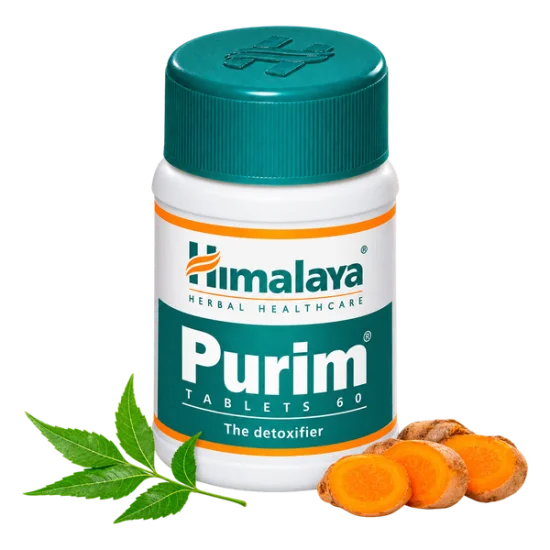
Purim tablets are an Ayurvedic botanical supplement positioned as a detoxifier and daily support for skin and general wellbeing. The tablets are intended for adults seeking plant-based support, while the exact amount and frequency depend on the purpose of use and should be agreed with a doctor or pharmacist.
Product information
Purim is supplied as tablets in a bottle containing 60 tablets. The product belongs to the Ayurvedic herbal supplement category and is described as a detoxifier. It is designed for oral use rather than application to the skin.
Therapeutic indications
Purim may appeal to adults who prefer a plant-based supplement and want support that fits into an established wellness routine.
The World Health Organization describes traditional medicine as a broad group of health practices with different theoretical foundations and evidence levels [1].
How it affects the body
Purim is an Ayurvedic herbal supplement supplied as tablets for oral use. It is described as a detoxifier and may provide plant-based support for skin and general wellbeing. The amount and frequency depend on the purpose of use and should be agreed with a doctor or pharmacist.
When not to use it
- Pregnancy or breastfeeding.
- Known allergy to any botanical component.
- Previous serious reaction to herbal products.
- Chronic liver or kidney disease.
- Gallbladder disease or recurrent biliary pain.
- Active gastrointestinal inflammation or severe digestive symptoms.
- Planned surgery, especially when medicines affecting bleeding are used.
- Use of several prescription medicines with a narrow safety margin.
- Use by a child unless specifically directed by a qualified clinician.
Herbal products can alter absorption, metabolism, or tolerability of medicines. Extra caution is appropriate with anticoagulants, antiplatelet medicines, diabetes treatments, blood-pressure medicines, immunosuppressants, sedatives, and medicines processed extensively by the liver.
The World Health Organization’s guidance on herbal medicines supports the need for attention to quality, safety monitoring, and interaction assessment when traditional products are used alongside conventional care [4].
When this is not for you
Purim is not for you if you need rapid treatment for severe skin symptoms, persistent digestive problems, or a diagnosed liver or kidney disorder.
Purim should not be used as a substitute for treatment of jaundice, severe acne, eczema flares, unexplained itching, recurrent abdominal pain, or abnormal liver tests. Those symptoms require assessment of their cause.
Possible side effects
Purim may be tolerated without difficulty by many adults, but herbal tablets can still cause unwanted effects. Possible problems include stomach discomfort, nausea, loose stools, constipation, headache, or sensitivity to one of the botanical components.
Allergic reactions require prompt attention. A raised rash, facial swelling, wheezing, or difficulty breathing can indicate a serious reaction and requires urgent medical care.
People with a sensitive stomach may notice symptoms when the tablets are taken on an empty stomach. Food may improve tolerance, though it does not remove the need to follow the agreed routine.
The risk profile may be less predictable in people with liver disease, kidney disease, gallbladder problems, autoimmune illness, or a history of significant allergies. Pregnancy and breastfeeding also require an individual assessment before use because botanical combinations may not have the same safety data as commonly used medicines.
The National Center for Complementary and Integrative Health advises that natural origin does not automatically mean that a product is free from side effects or interactions [3]. This is a practical reason to include supplements in the medication history given to a healthcare professional.
Ingredients
Purim is supplied as tablets in a bottle containing 60 tablets. The product belongs to the Ayurvedic herbal supplement category and is described as a detoxifier. It is designed for oral use rather than application to the skin.
The product’s role is supportive. Ayurvedic detoxification generally refers to traditional approaches intended to support digestion, elimination, and skin balance. These concepts do not correspond to one single pharmaceutical mechanism, and Purim should not be presented as a treatment for a diagnosed disease.
Botanical supplements can vary in their effects from person to person. The response may depend on diet, digestive tolerance, hydration, existing health conditions, and concurrent medicines.
The exact quantity and frequency for Purim depend on the intended purpose of use. A doctor or pharmacist can help match the routine to the person’s age, health status, and other medicines.
Dosage and administration
Purim is taken orally as tablets. The amount to use and how often to take it depend on the purpose of use and are agreed with a doctor or pharmacist.
- Swallow the tablets with water.
- Keep the daily routine consistent.
- Avoid taking more than the agreed amount.
- If stomach discomfort develops, taking the tablets with food may be easier to tolerate.
- If a dose is missed, take the next planned dose rather than taking extra tablets to compensate.
- Stop and seek specific medical advice if swelling, breathing difficulty, widespread rash, or severe abdominal symptoms occur.
The suitable duration also depends on the reason for use. A short trial may be reasonable for a general wellness goal, while ongoing use requires periodic review, especially when other medicines are taken.
One practical detail is easy to overlook: tablets can be harder to swallow when taken with too little liquid. Sitting upright and drinking a full glass of water is preferable to swallowing them dry.
Comparison
Purim can be compared with broader approaches by category rather than by brand. Prescription treatment, topical skin care, and general dietary support serve different purposes and should not be treated as interchangeable.
| Approach | Main role |
|---|---|
| Ayurvedic botanical tablets | Oral, traditional wellness support |
| Topical skin care | Direct support for the skin surface |
| Clinically diagnosed-condition treatment | Targeted therapy selected for a specific disease |
Purim may fit a general wellness plan when the goal is plant-based oral support. A topical product may be more relevant when the concern is limited to dryness, irritation, or barrier maintenance. Medical treatment is more appropriate when symptoms are persistent, painful, spreading, infected, or associated with systemic illness.
The European Medicines Agency distinguishes between medicines evaluated for therapeutic indications and herbal products used within different regulatory frameworks [2]. This distinction does not make a botanical supplement unsuitable; it defines the type of evidence and the expectations that should guide its use.
Common mistakes
Several routine errors can make a supplement harder to assess:
- Increasing the number of tablets because the expected result is slow.
- Taking Purim irregularly and judging it after only a few isolated doses.
- Combining it with several new supplements.
- Failing to mention herbal use before starting a prescription medicine.
- Continuing it despite a persistent rash or significant digestive symptoms.
- Treating a serious skin or digestive condition as a detoxification problem.
- Taking tablets with very little water.
- Assuming that a plant-based product cannot interact with medicines.
- Using it during pregnancy without an individual safety assessment.
One less obvious mistake is changing diet and skin care at the same time as starting Purim. When several variables change together, it becomes difficult to know what helped or caused an adverse reaction.
Another is confusing a temporary digestive change with proof that the product is “working.” Loose stools, cramping, or nausea are unwanted effects, not reliable evidence of detoxification.
What doctors say
In clinical practice, doctors usually judge a botanical supplement by three factors: the reason for use, the person’s medical history, and the medicines already being taken. Purim may be considered as supportive care for a generally well adult, but its role is different from treatment directed at a confirmed diagnosis.
A doctor would also set realistic expectations. Improvement in general wellbeing or skin comfort, if it occurs, is usually gradual and may be influenced by sleep, food, hydration, stress, and existing skin care. A lack of benefit after a reasonable trial should lead to a review of the original goal rather than automatic dose escalation.
The product may be a poor choice when symptoms are new, severe, or unexplained. Facial swelling, widespread rash, dark urine, yellowing of the eyes, blood in the stool, persistent vomiting, and marked abdominal pain require medical evaluation rather than self-treatment.
The evidence base for Ayurveda is mixed because individual formulations, preparation methods, and study designs differ. A review indexed in PubMed describes both traditional use and the need for stronger evidence for many Ayurvedic interventions [5]. That evidence-based view allows Purim to be used thoughtfully without assigning it claims that have not been established.
Common questions
What should I do after missing a Purim dose?
Take the next planned dose rather than doubling the amount. The FDA advises against compensating for a missed dose by taking extra medicine unless specific product instructions say otherwise. Medication-safety guidance available in 2024 supports returning to the planned schedule. For Purim, the safest routine is to return to the agreed schedule and monitor for digestive discomfort if an accidental extra dose was taken.
What should I do if the expected result does not appear?
Do not increase the amount automatically when the expected benefit does not appear. A doctor or pharmacist can review the original goal, the duration of use, other supplements, diet, and possible medical causes of the symptoms. WHO guidance published in 2019 supports a careful assessment of traditional products rather than assuming that lack of improvement means a higher amount is needed .
How long does one dose of Purim keep working?
Purim should not be treated as a product with a predictable, immediate duration of action like some prescription medicines. The experience of a single dose can vary according to digestion, food intake, the person’s health, and the intended wellness goal. NCCIH information from 2023 on complementary products explains that effects and evidence can differ between formulations, so the daily schedule should follow individualized advice rather than a fixed expectation.
How does Purim differ from a conventional medicine with one active substance?
Purim is an Ayurvedic botanical combination positioned as a detoxifier, while a conventional medicine generally targets a defined condition through a characterized active substance and studied pharmacological pathway. The two categories differ in evidence, dosing precision, regulatory assessment, and clinical purpose. EMA guidance from 2018 on herbal medicinal products separates traditional-use evidence from the evidence required for established therapeutic indications.
Can Purim tablets be split, crushed, or chewed?
Swallow the tablets whole unless a doctor or pharmacist gives different instructions. Crushing or chewing can make swallowing easier for some people, but it may change taste and gastrointestinal tolerability and can make the intended tablet form harder to use consistently. WHO guidance from 2004 on traditional medicines supports following product-specific administration advice and avoiding unplanned changes to the dosage form.
Which diet, exercise, or habits may support the result?
Regular hydration, adequate fibre, moderate physical activity, consistent sleep, and a balanced diet can support general digestive and skin health. Heavy alcohol use, dehydration, highly irregular meals, and frequent introduction of new supplements can make symptoms harder to interpret. The UAE Ministry of Health and Prevention’s 2022 guidance promotes preventive health and healthy lifestyle measures as part of broader wellbeing, while Purim should remain a supportive supplement rather than the sole health intervention.
Do you offer anonymous delivery?
Your order will be securely packed and shipped within 24 hours. This is exactly what your package will look like (images of an actual item sent). It has the size and look of a regular private letter (24x11x0.7 cm) and its contents cannot be seen.
Comparison
How Buyers Rate Purim
-
Bilal L., 44 Al Nahda · Several weeks 25 Oct 2026Rating: 5 out of 5I used Purim tablets as directed as part of a daily wellness routine for several weeks. My skin felt more balanced, and I liked that the tablets were easy to include after breakfast. The bottle was convenient for keeping at home.
-
Joseph A., 59 Bur Dubai · Several weeks 6 Nov 2026Rating: 5 out of 5I took Purim as directed because I wanted an Ayurvedic supplement rather than another conventional tablet. After using it consistently for several weeks, I felt that my digestion was more comfortable and my general routine was steadier. The tablets were straightforward to swallow with water.
-
Anil S., 47 Abu Dhabi · Several weeks 15 Nov 2026Rating: 4.5 out of 5I took Purim as directed regularly for several weeks and noticed a gradual improvement in how my skin looked. The change was not immediate, but it became more noticeable after I kept the routine consistent. I was satisfied with the product as part of my broader wellness habits.
-
Nadeem, 43 Jebel Ali · The first part of use 22 Nov 2026Rating: 3 out of 5I took Purim as directed, but it did not produce the clear result I expected during the first part of use. I also noticed mild stomach discomfort on some days, so I stopped taking it and discussed the symptoms with a doctor. The experience reminded me that a botanical product can still require careful monitoring.
Sources
- World Health Organization (2019). WHO Global Report on Traditional and Complementary Medicine 2019.
- European Medicines Agency (2018). Guideline on the Assessment of Herbal Medicinal Products.
- National Center for Complementary and Integrative Health (2023). Using Dietary Supplements Wisely.
- World Health Organization (2004). WHO Guidelines on Safety Monitoring of Herbal Medicines in Pharmacovigilance Systems.
- Ministry of Health and Prevention, United Arab Emirates (2022). National Health and Prevention Strategy.
