
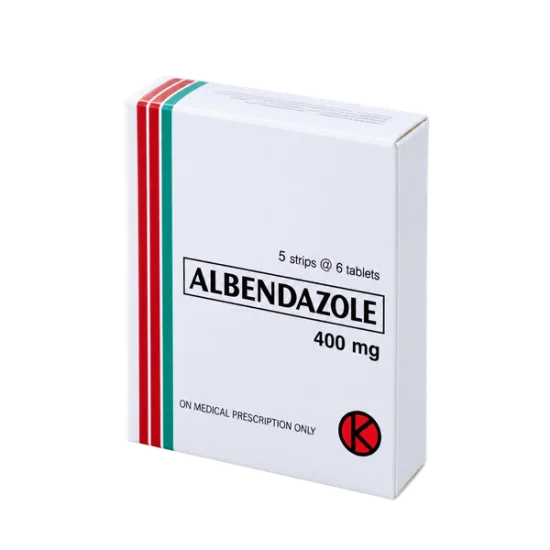
Albendazole
Active ingredient: Albendazole
Delivery: from 4 days
- Only original products
- Worldwide Delivery
- 24/7 Support
Albendazole is an oral antiparasitic tablet for intestinal worm infections and selected tissue-dwelling parasites. Treatment and dosing vary between infections, strengths, and users, supporting the clearance of susceptible parasites.
Product information
Albendazole is an oral antiparasitic tablet used for intestinal worm infections and selected tissue-dwelling parasites. Albendazole belongs to the benzimidazole class of anthelmintics. Its active ingredient is albendazole, supplied here as oral tablets. Dosing differs between strengths and between users, so no single amount suits everyone.
Therapeutic indications
Albendazole has activity against several parasites, but the correct regimen depends on the organism and its location in the body. Intestinal infections may need a short course, while tissue-dwelling parasites require medical supervision and longer treatment.
| Parasite or condition | Main site | Treatment context |
|---|---|---|
| Ascaris lumbricoides | Small intestine | Intestinal nematode treatment |
| Pinworm infection | Colon and perianal region | Short treatment with reinfection control |
| Echinococcus granulosus | Liver and other tissues | Hydatid disease requiring prolonged specialist therapy |
Intestinal Nematodes and Soil-Transmitted Helminths
Soil-transmitted helminth infections include ascariasis, hookworm disease, and trichuriasis. Transmission occurs when infective eggs or larvae from contaminated soil reach the mouth, often through unwashed hands, unsafe food, or contact with contaminated surfaces.
Albendazole is used against Ascaris lumbricoides and several other intestinal worms. Pinworm infection has a high reinfection rate because microscopic eggs spread easily within households. Itching around the anus, especially at night, is a typical symptom, although diagnosis should guide treatment.
WHO preventive chemotherapy programmes use anthelmintic medicines such as albendazole in communities where soil-transmitted helminths are common [1]. Individual treatment still requires attention to the identified parasite and the person’s clinical circumstances.
Systemic and Tissue Parasite Management
Albendazole also treats selected cestode infections. Hydatid disease caused by Echinococcus granulosus can involve the liver, lungs, or other organs. Neurocysticercosis, caused by larval Taenia solium, affects the nervous system and may involve seizures, headaches, or raised intracranial pressure.
These infections are medically different from ordinary intestinal worms. Treatment may combine albendazole with corticosteroid therapy, anticonvulsant treatment, surgery, or repeated courses, depending on cyst location and disease stage. A medical team may monitor liver enzymes, blood counts, neurological symptoms, and inflammatory reactions as parasites die.
Albendazole Tablets do not treat fungal ringworm. Ringworm is a dermatophyte infection and requires an antifungal approach rather than an anthelmintic.
How it affects the body
Albendazole Tablets act inside the parasite rather than simply paralysing it. The drug interferes with tubulin, a structural protein needed for cell division and nutrient absorption. Parasites gradually lose access to glucose and energy, then die or become unable to maintain infection.
When not to use it
Albendazole is not suitable for you if you have a serious allergy to albendazole or another benzimidazole anthelmintic. Additional caution is required in the following situations:
- Known liver disease or persistently abnormal liver enzymes
- Pregnancy, especially during the first trimester, unless a clinician determines that treatment is necessary
- Planned pregnancy or difficulty confirming pregnancy status
- Previous severe reaction to an anthelmintic
- Suspected neurocysticercosis with seizures, visual symptoms, or severe headache
- Bone-marrow disorders or low blood-cell counts
- Medicines with clinically important liver toxicity
When this is not for you
Pregnancy planning matters because albendazole is not routinely used during early pregnancy. The risk-benefit decision depends on the infection and the individual patient.
Patients with neurocysticercosis may deteriorate temporarily when parasites die and inflammation increases. Seizures, confusion, weakness, visual changes, or intense headache require urgent medical assessment rather than an additional antiparasitic dose.
Possible side effects
Short courses are often tolerated without serious problems, but reactions can occur. The FDA prescribing information describes abdominal pain, nausea, vomiting, headache, dizziness, and changes in liver enzymes among reported adverse effects [2].
Mild reactions may include:
- Abdominal discomfort or diarrhoea
- Nausea or vomiting
- Headache or dizziness
- Temporary fatigue
- Reduced appetite
- Fever during treatment of tissue parasites
- Facial flushing or skin discomfort
Acute spasmodic coughing is not a typical routine reaction, but sudden coughing with wheezing, throat tightness, facial swelling, or difficulty breathing may indicate a serious allergic reaction. Stop further doses and seek urgent medical care if these symptoms occur.
Extreme fatigue can reflect a mild treatment reaction, the underlying infection, anaemia, liver dysfunction, or an inflammatory response to dying parasites. Fatigue accompanied by yellow skin, dark urine, pale stools, persistent vomiting, or pain under the right ribs needs prompt assessment.
Serious complications include:
- Liver injury or significant increases in liver enzymes
- Low white-cell or platelet counts during prolonged therapy
- Severe allergic reactions
- Seizures or worsening neurological symptoms in patients with central nervous system infection
- Increased pressure around the brain, especially when neurocysticercosis causes inflammation or swelling
Liver monitoring becomes more important when treatment is prolonged or repeated. A person with known liver disease may require a different treatment plan or closer laboratory supervision.
Ingredients
Albendazole belongs to the benzimidazole class of anthelmintics. Its active ingredient is albendazole, supplied here as oral tablets. Dosing differs between strengths and between users, so no single amount suits everyone. The medicine is used against several nematodes and cestodes, including intestinal worms and larvae that affect tissues.
Dosage and administration
There is no single schedule that suits every user or infection because treatment plans differ between strengths and between users.
- Swallow the tablet by mouth with water.
- Use it with a meal when systemic absorption is required, especially during treatment of tissue parasites.
- Follow the prescribed schedule for the diagnosed infection.
- Do not repeat a dose simply because symptoms continue.
- If a dose is missed, take it when remembered unless the next scheduled dose is near; do not double the next dose.
- For children, dosing may depend on age and body weight, so adult tablet schedules should not be copied automatically.
- A prolonged course may require blood counts and liver-function testing.
Albendazole treatment for pinworm infection may require attention to household reinfection because eggs can remain on bedding, clothing, towels, and household surfaces. Washing hands after using the bathroom and before meals helps reduce transmission. A clinician may recommend treatment of close household contacts when reinfection is likely.
Do not crush, chew, or split the tablet unless the prescribed product instructions specifically allow it. Altering a tablet can make administration difficult and may lead to an incomplete dose, especially in children.
Comparison
Albendazole, praziquantel, and ivermectin belong to different pharmacological groups. Selection depends on the parasite, its life stage, the affected organ, pregnancy status, age, neurological involvement, and local treatment guidance.
| Medicine | Main pharmacological role | Typical selection context |
|---|---|---|
| Albendazole | Benzimidazole; disrupts parasite tubulin and glucose use | Many intestinal nematodes and selected tissue cestodes |
| Praziquantel | Increases parasite membrane calcium permeability | Several tapeworm and fluke infections |
| Ivermectin | Activates parasite chloride channels | Strongyloidiasis, onchocerciasis, and selected nematode infections |
Albendazole is often chosen when the suspected organism is an intestinal roundworm or a tissue cestode responsive to benzimidazoles. Praziquantel is more closely associated with many trematode and cestode infections. Ivermectin has a different target and is preferred for conditions such as strongyloidiasis.
Combination therapy is not automatically better. Albendazole and praziquantel may be used together in selected cases, while ivermectin may be chosen when the parasite’s biology makes its chloride-channel effect more suitable. The Centers for Disease Control and Prevention treatment guidance distinguishes these choices by organism and infection site [3].
Common mistakes
The most frequent problems arise from using the wrong regimen for the wrong parasite.
- Repeating a single dose because itching continues
- Using an intestinal-worm schedule for hydatid disease or neurocysticercosis
- Taking extra tablets after seeing no visible change in stool
- Forgetting that pinworm treatment can fail through household reinfection
- Starting treatment without mentioning liver disease
- Combining albendazole with dexamethasone or praziquantel without a defined plan
- Stopping a prolonged course after symptoms improve
- Crushing tablets for a child without confirming an appropriate administration method
- Assuming that facial flushing, severe fatigue, or coughing is always harmless
- Missing blood tests during an extended treatment cycle
One practical detail is easy to miss: killing tissue parasites can provoke inflammation, so symptoms may briefly change even when treatment is working. That pattern needs clinical interpretation.
A second mistake is treating family members automatically. Household treatment can be appropriate for pinworm control, but it is not a universal rule for every parasitic infection.
What doctors say
In clinical practice, doctors usually begin by identifying the parasite rather than choosing a tablet based only on symptoms. Abdominal discomfort, itching, cough, weight loss, or fatigue can have many causes, and treatment without diagnosis may miss a non-parasitic condition.
A physician also separates uncomplicated intestinal infection from tissue disease. Hydatid disease and neurocysticercosis can require imaging, serology, surgery, corticosteroids, or anticonvulsants in addition to albendazole. The treatment plan may therefore include monitoring after the last tablet has been taken.
Albendazole is not suitable for every abdominal complaint. A persistent symptom after treatment may mean reinfection, an incorrect diagnosis, incomplete parasite clearance, or another illness.
Common questions
How long does one dose of Albendazole keep working?
Albendazole exposure depends on the parasite, the dose schedule, food intake, and whether the infection is confined to the intestine or located in tissue. A single intestinal regimen can act during the treatment period, but it does not provide indefinite protection from reinfection. WHO guidance published in 2017 describes albendazole as treatment or preventive chemotherapy for susceptible soil-transmitted helminths, not as a long-term protective medicine . Hygiene and avoidance of renewed exposure remain relevant after treatment. A follow-up test may be needed when symptoms persist.
What is the best time of day to take Albendazole?
There is no universal clock time that suits every albendazole regimen. A tablet used for an intestinal infection may follow the prescribed schedule, while systemic treatment is commonly taken with food to improve absorption. The 2020 FDA albendazole prescribing information identifies a high-fat meal as relevant to systemic exposure, especially for tissue infections. Taking the medicine at a consistent time can make a multi-day course easier to complete.
What happens after stopping Albendazole, and does it need tapering?
Albendazole is generally stopped when the prescribed course ends; it does not usually require tapering like a corticosteroid. Parasites may still be cleared after the final tablet because the active metabolite has already acted on their cellular processes. The clinical outcome depends on the organism, infection site, and adequacy of the course. WHO treatment guidance from 2017 supports regimen selection according to the parasite rather than extending therapy automatically .
How does Albendazole differ from Praziquantel and Ivermectin?
Albendazole is a benzimidazole that disrupts parasite tubulin and energy use. Praziquantel increases calcium movement through parasite membranes, while ivermectin activates chloride channels in susceptible parasites. CDC treatment guidance published in 2024 selects among these medicines according to the organism and site of infection . One cannot replace another simply because all three are called antiparasitic medicines.
Can alcohol be used while taking Albendazole?
Alcohol can add to nausea, dizziness, and stomach irritation, and heavy alcohol exposure can place additional stress on the liver. This concern becomes more relevant during prolonged albendazole therapy or when liver enzymes are already abnormal. The FDA label from 2020 warns about hepatic monitoring during extended treatment, although it does not define a universal alcohol-free interval . Avoiding alcohol during treatment is a sensible way to reduce avoidable liver and gastrointestinal strain.
Do you offer anonymous delivery?
Your order will be securely packed and shipped within 24 hours. This is exactly what your package will look like (images of an actual item sent). It has the size and look of a regular private letter (24x11x0.7 cm) and its contents cannot be seen.
Comparison
How Buyers Rate Albendazole
-
Sultan, 35 Dubai Marina · At the prescribed dose for the prescribed duration 20 Nov 2026Rating: 4.5 out of 5I took the prescribed albendazole tablet for a diagnosed intestinal worm infection. The abdominal discomfort settled over the following days, and the nighttime itching stopped. I was pleased that the treatment was straightforward.
-
Rachel, 49 Jebel Ali · At the prescribed dose for the prescribed duration 25 Oct 2026Rating: 2 out of 5Albendazole did not make a clear difference for my symptoms after the first course. I also felt tired and had stomach discomfort, so I stopped taking further doses and arranged a medical review rather than repeating it myself.
-
Zubair S., 49 Al Barsha · At the prescribed dose for the prescribed duration 7 Nov 2026Rating: 5 out of 5The treatment helped with the persistent abdominal symptoms I had been dealing with. Improvement was gradual rather than immediate, but by the end of the prescribed course I felt much better and returned to normal meals.
-
Hannah, 59 Dubai · At the prescribed dose for the prescribed duration 1 Nov 2026Rating: 4 out of 5I used albendazole as part of treatment for a confirmed parasite infection. The main benefit was that the recurring digestive complaints eased over the next couple of weeks. I found the tablet easy to take with food.
Sources
- World Health Organization (2017). Guideline: Preventive chemotherapy to control soil-transmitted helminth infections in at-risk population groups.
- U.S. Food and Drug Administration (2020). ALBENZA (albendazole) tablets, for oral use — Prescribing Information.
- Centers for Disease Control and Prevention (2024). Clinical Care of Soil-transmitted Helminths.
