
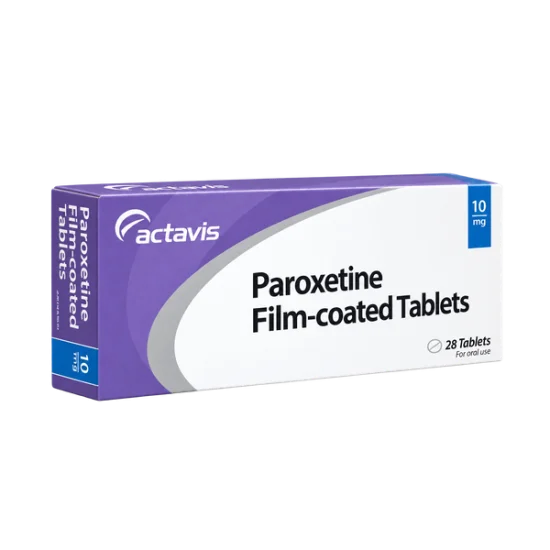
Paroxetine
Active ingredient: Paroxetine
Delivery: from 4 days
- Only original products
- Worldwide Delivery
- 24/7 Support
Paroxetine is intended for adults with diagnosed depressive or anxiety-related disorders. It is an SSRI that increases serotonin signalling in the brain, helping regulate mood, fear responses, intrusive thoughts, and panic symptoms.
Product information
Paroxetine is a selective serotonin reuptake inhibitor, commonly abbreviated as SSRI. The tablets contain paroxetine and are used under medical direction for conditions in which altered serotonin signalling contributes to persistent low mood, anxiety, panic, or obsessive symptoms.
Therapeutic indications
Paroxetine is prescribed for:
- Major depressive disorder
- Panic disorder, with or without agoraphobia
- Social anxiety disorder
- Obsessive-compulsive disorder
- Generalised anxiety disorder
- Post-traumatic stress disorder
The exact approved indications can vary by jurisdiction and product authorisation. The active medicine is also used in clinical practice for other anxiety-related conditions when a prescriber considers the potential benefit appropriate. NICE guidance describes SSRIs as established treatment options for depression and several anxiety disorders [1].
Approved Clinical Indications
Major depressive disorder involves persistent depressed mood or loss of interest with associated changes in sleep, energy, appetite, concentration, or self-worth. Paroxetine can help reduce these symptoms after regular use, though improvement is gradual rather than immediate.
Panic disorder involves recurrent panic attacks and concern about further attacks. Paroxetine can reduce the frequency and severity of attacks, but anxiety may feel temporarily stronger during the first phase of treatment in some patients.
Social anxiety disorder causes intense fear of scrutiny, embarrassment, or social performance. Treatment aims to reduce excessive fear and avoidance, often alongside psychological therapy.
How it affects the body
Paroxetine blocks the serotonin transporter, reducing the reuptake of serotonin from the synaptic cleft into the presynaptic nerve cell. More serotonin remains available between nerve cells, where it can stimulate postsynaptic receptors.
Serotonin influences mood, anxiety, sleep, appetite, pain processing, and stress responses. The clinical benefit develops through gradual changes in neural signalling and adaptation. This explains why nausea or restlessness may appear before mood or anxiety improves.
Paroxetine is a potent inhibitor of the hepatic enzyme CYP2D6. CYP2D6 helps metabolise several medicines, including some antipsychotics, antiarrhythmics, opioid analgesics, and beta-blockers. Inhibition can increase exposure to these medicines and may raise the risk of adverse effects.
The mechanism differs from medicines that primarily affect noradrenaline, dopamine, or both serotonin and noradrenaline. Paroxetine is serotonin-focused, which can be useful when anxiety and panic symptoms are prominent. Its drawbacks include sexual dysfunction, withdrawal symptoms after abrupt cessation, and a greater interaction burden through CYP2D6 inhibition.
The United States Food and Drug Administration describes serotonin reuptake inhibition and CYP2D6-related interactions in the paroxetine prescribing information [2].
When not to use it
Paroxetine is not suitable for everyone. The following situations require a clear treatment decision before the first dose:
- Current use of a monoamine oxidase inhibitor, including certain medicines used for depression or Parkinson’s disease
- Recent use of a monoamine oxidase inhibitor without the required washout interval
- Use of thioridazine
- Use of pimozide
- Previous serious allergic reaction to paroxetine or one of its ingredients
- Bipolar disorder without assessment for past mania or hypomania
- A history of seizures, bleeding problems, or severe low sodium
- Pregnancy or plans for pregnancy, where benefits and fetal or neonatal risks require assessment
- Breastfeeding, because paroxetine passes into breast milk in small amounts
Combining paroxetine with a monoamine oxidase inhibitor can cause serotonin syndrome, a potentially dangerous reaction involving excessive serotonin activity. Symptoms may include agitation, confusion, sweating, fever, tremor, muscle rigidity, diarrhoea, and rapid changes in heart rate or blood pressure.
St John’s wort can also increase serotonin activity. Combining it with paroxetine may contribute to serotonin syndrome and should be avoided unless a specialist has made a specific treatment plan.
Thioridazine and pimozide can affect cardiac electrical activity. Paroxetine can increase exposure to these medicines, creating a risk of serious rhythm disturbance. They are contraindicated combinations.
Other medicines require individual review:
- Tramadol and other serotonergic opioids can increase serotonin syndrome risk.
- Linezolid and intravenous methylene blue have monoamine oxidase activity.
- Anticoagulants, aspirin, and non-steroidal anti-inflammatory drugs can increase bleeding risk.
- Tamoxifen may become less reliable because CYP2D6 inhibition can reduce formation of its active metabolite.
- Some antipsychotics, antiarrhythmics, and beta-blockers may reach higher concentrations.
- Alcohol can worsen drowsiness, impaired judgement, or mood instability.
The WHO describes serotonin toxicity as a clinically important adverse reaction associated with combinations of serotonergic medicines [3].
When this is not for you
NOT for you if you are taking a monoamine oxidase inhibitor, have untreated bipolar disorder, or cannot follow a prescriber-guided taper.
Possible side effects
Paroxetine can cause side effects, especially during the first days or weeks. Many improve as the body adapts, while some persist and require a treatment review.
Commonly reported effects include:
- Nausea or stomach discomfort
- Diarrhoea or constipation
- Dry mouth
- Headache
- Dizziness
- Tiredness or sleepiness
- Insomnia or unusual dreams
- Sweating
- Tremor or feeling restless
- Reduced appetite
- Sexual difficulties, including reduced desire, delayed orgasm, or erection problems
Sexual side effects can occur even when mood and anxiety improve. They may continue during treatment and, in uncommon cases, after treatment has ended. This concern should be raised early because changing the dose or medicine may be considered.
Paroxetine can also cause emotional blunting, in which distress is reduced but positive emotions feel less intense. Some patients describe this as feeling detached rather than depressed. It is a treatment issue, not a reason to stop abruptly.
Urgent medical assessment is needed for:
- Suicidal thoughts or a sudden worsening of depression
- Severe agitation, confusion, fever, sweating, tremor, or muscle stiffness
- Fainting, a fast or irregular heartbeat, or chest discomfort
- Seizure
- Severe allergic swelling or breathing difficulty
- Unusual bruising, black stools, vomiting blood, or heavy bleeding
- Severe eye pain with blurred vision or coloured halos
- Marked weakness, confusion, headache, or unsteadiness that could indicate low sodium
Children, adolescents, and young adults require close observation for mood deterioration or suicidal thinking when starting an antidepressant. Paroxetine is not routinely used for depression in people under 18 because the balance of benefit and risk differs in this age group.
Ingredients
The tablets contain paroxetine as the active medicine. Paroxetine is a selective serotonin reuptake inhibitor (SSRI) used under medical direction for diagnosed depressive and anxiety-related disorders. The pack marking identifies a 10 mg film-coated tablet.
Dosage and administration
Paroxetine is taken orally as tablets. The prescribing dose depends on the diagnosis, previous treatment, age, tolerability, liver or kidney function, and interactions with other medicines.
- Take the prescribed amount once daily unless the prescriber gives different instructions.
- Take the tablet at a consistent time each day.
- Swallow it with water.
- It may be taken with food or on an empty stomach.
- Do not double the next dose after a missed dose.
- If a dose is missed, take it when remembered unless the next scheduled dose is near; then skip the missed dose.
- Do not stop suddenly after regular treatment.
- Dose changes should be gradual and directed by the prescriber.
Dosing differs between strengths and between users, so there is no single amount that suits everyone. Older adults and people with significant liver or kidney impairment may require a lower treatment plan. Paroxetine may also require slower adjustment when it is prescribed for panic disorder because early activation can be uncomfortable.
One practical issue is timing. Some people feel sleepy after taking paroxetine, while others feel more alert or restless. The first few doses should be observed before deciding whether morning or evening administration fits daily activities, and any change should remain consistent.
Comparison
Paroxetine is an oral, single-ingredient SSRI. Its approach differs from treatments that do not act through serotonin reuptake inhibition, because it is intended to increase serotonin signalling in the brain and help regulate mood, fear responses, intrusive thoughts, and panic symptoms.
Common mistakes
Several preventable mistakes can make paroxetine appear ineffective or poorly tolerated:
- Stopping after a few days because nausea or nervousness appears
- Increasing the amount without medical direction because improvement is slow
- Taking the medicine on some days but not others
- Doubling a missed dose
- Stopping suddenly after feeling better
- Adding St John’s wort or a serotonergic pain medicine without checking interactions
- Failing to mention tamoxifen, tramadol, anticoagulants, or anti-inflammatory medicines
- Assuming sexual side effects will disappear without discussing them
- Driving or operating machinery before knowing whether dizziness or sleepiness occurs
- Treating sudden severe mood changes as a routine adjustment
One easily missed detail is the missed-dose pattern. Taking two doses close together does not restore a stable treatment level and can intensify nausea, dizziness, or agitation.
Another is the first-week driving decision. Some people feel tired; others feel restless or have impaired concentration. Work involving heights, heavy equipment, or road driving deserves extra caution until the personal response is clear.
What doctors say
In clinical practice, prescribers usually set modest early expectations. The first treatment goal may be improved sleep, appetite, panic control, or the ability to complete basic tasks before full mood recovery becomes noticeable.
A doctor will usually review the diagnosis before prescribing paroxetine because depression, bipolar disorder, panic disorder, obsessive-compulsive disorder, and medication-related symptoms can overlap. A history of mania is especially relevant. An antidepressant used alone in bipolar disorder can worsen mood instability.
Paroxetine may suit a patient whose anxiety, panic, or intrusive thoughts accompany depression. The same medicine may be less suitable for someone already experiencing troublesome sexual dysfunction, taking several CYP2D6 substrates, or likely to have difficulty with a gradual withdrawal plan.
Consistency matters clinically. Irregular dosing can create fluctuating symptoms and may be mistaken for treatment failure. Abrupt discontinuation can produce dizziness, electric-shock sensations, nausea, vivid dreams, irritability, anxiety, and sleep disturbance.
Treatment response is not judged only by mood. Function also matters: attending work, leaving home, concentrating, maintaining relationships, and managing ordinary responsibilities can show meaningful progress.
Common questions
What should be discussed with a doctor before starting paroxetine?
Tell the prescriber about previous mania, seizures, bleeding problems, glaucoma, liver or kidney disease, pregnancy, breastfeeding, and every medicine or supplement being used. Particular attention is needed for monoamine oxidase inhibitors, St John’s wort, tramadol, tamoxifen, anticoagulants, and anti-inflammatory medicines. The FDA prescribing information reviewed in 2023 lists major contraindications and interaction risks that can change the treatment decision. A diagnosis of bipolar disorder also needs careful assessment before an SSRI is started.
Can paroxetine affect driving, concentration, or machinery work?
Paroxetine may cause dizziness, sleepiness, blurred vision, restlessness, or reduced concentration, especially during early treatment or after a dose change. The NHS and European Medicines Agency safety information have continued to treat individual response as the key factor in 2025. Avoid driving, climbing, or operating machinery until the personal reaction is clear. Alcohol may increase impairment and can make judgement less reliable.
Which symptoms mean stopping and seeking urgent medical help?
Urgent help is needed for suicidal thoughts, severe agitation, confusion, fever, heavy sweating, tremor, muscle stiffness, seizure, fainting, severe allergic swelling, or unusual bleeding. These symptoms may indicate serotonin syndrome, a serious reaction, seizure, an allergic event, or another urgent problem. WHO safety information from 2019 identifies rapidly developing combinations of mental, autonomic, and neuromuscular symptoms as warning signs of serotonin toxicity. Do not take another dose while urgent advice is being obtained if severe symptoms develop. A clinician can then advise when the next dose is appropriate.
Can paroxetine be taken with food or on an empty stomach?
Paroxetine tablets can generally be taken with food or without food. The FDA label available in 2023 describes administration without a requirement for a specific meal. Taking it with a light meal may reduce nausea for some patients, while taking it at the same time each day supports a stable routine. Food does not remove the risks from alcohol, St John’s wort, monoamine oxidase inhibitors, or other interacting medicines.
How soon does the effect of paroxetine become noticeable?
Some early changes may appear during the first one or two weeks, but improvement in depression, panic, or social anxiety commonly takes several weeks of regular treatment. NICE guidance updated in 2022 advises reviewing response, tolerability, and safety rather than judging an antidepressant after only a few doses. Sleep, appetite, agitation, and anxiety can change before mood improves. If symptoms worsen sharply or suicidal thoughts appear, urgent medical help is required rather than waiting for the expected treatment window.
Do you offer anonymous delivery?
Your order will be securely packed and shipped within 24 hours. This is exactly what your package will look like (images of an actual item sent). It has the size and look of a regular private letter (24x11x0.7 cm) and its contents cannot be seen.
Comparison
How Buyers Rate Paroxetine
-
Anil, 56 Jebel Ali · Several weeks 25 Oct 2026Rating: 4 out of 5I used paroxetine for several weeks and noticed that the constant low mood became easier to manage. I was able to return to my normal morning routine and felt satisfied with the improvement.
-
Nadeem D., 65 Jumeirah 31 Oct 2026Rating: 4.5 out of 5The panic symptoms gradually became less intrusive after I had taken the tablets regularly. I slept more steadily and found everyday errands less difficult than before.
-
Joseph, 40 Sharjah 6 Nov 2026Rating: 3.5 out of 5Paroxetine helped reduce the anxious thoughts, but the change was slower than I expected. I also had a dry mouth during the first part of treatment, which was manageable but annoying.
-
Waleed T., 45 Mirdif 12 Nov 2026Rating: 4 out of 5My mood lifted gradually and I found it easier to concentrate at work. The benefit was clear enough for me to feel that the treatment was worthwhile.
-
Samir H., 26 Al Barsha 20 Nov 2026Rating: 2 out of 5I did not feel better after taking it and became more restless at night. The side effects made me stop and discuss other options with my doctor.
Sources
- NICE (2022). Depression in adults: treatment and management, NICE guideline NG222.
- U.S. Food and Drug Administration (2023). Paxil (paroxetine hydrochloride) prescribing information.
- World Health Organization (2019). WHO Model Formulary 2019.
