
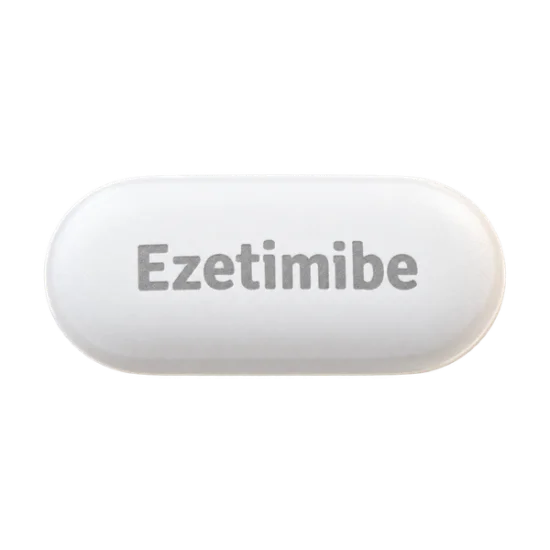
Ezetimibe
Active ingredient: Ezetimibe
Delivery: from 4 days
- Only original products
- Worldwide Delivery
- 24/7 Support
Adults with dyslipidaemia or hyperlipidaemia may use Ezetimibe when cholesterol remains above target despite diet, exercise, or statin treatment. Ezetimibe reduces intestinal cholesterol absorption and can be prescribed alone or alongside a statin to lower low-density lipoprotein cholesterol.
Product information
Ezetimibe is an oral cholesterol absorption inhibitor supplied as tablets. Its active substance, ezetimibe, belongs to a different pharmacological class from statins. It is used for primary hypercholesterolaemia, mixed dyslipidaemia, and selected inherited lipid disorders when lowering low-density lipoprotein cholesterol is clinically necessary. The European Medicines Agency describes ezetimibe as a treatment that can be used alone or with a statin, depending on the patient’s lipid profile and treatment response [1].
Therapeutic indications
It is used for primary hypercholesterolaemia, mixed dyslipidaemia, and selected inherited lipid disorders when lowering low-density lipoprotein cholesterol is clinically necessary.
Ezetimibe may be prescribed when statin monotherapy does not produce sufficient LDL cholesterol reduction, when a patient cannot tolerate the required statin intensity, or when additional lipid lowering is needed for cardiovascular risk management. It does not replace dietary changes, physical activity, or other measures used to manage dyslipidaemia.
How it affects the body
Ezetimibe acts at the brush border of the small intestine. It blocks the Niemann-Pick C1-Like 1, or NPC1L1, transporter, a protein involved in the uptake of dietary and biliary cholesterol. This reduces cholesterol absorption across the intestinal wall and lowers the delivery of cholesterol to the liver.
The liver responds by increasing LDL-receptor activity and removing more LDL particles from the bloodstream. This mechanism differs from that of statins. Statins inhibit hepatic HMG-CoA reductase, reducing cholesterol production inside the liver. The two mechanisms can complement each other when a single treatment does not achieve the desired LDL cholesterol level.
The effect is selective. Ezetimibe reduces cholesterol absorption without acting as a general fat-blocking medicine, so it does not prevent the absorption of every dietary lipid.
A practical detail is easy to miss: the medicine works on cholesterol transport in the intestine, but it still needs to be taken regularly. Missing tablets repeatedly can make a later lipid test appear less favourable without causing any immediate symptoms.
When not to use it
Conditions requiring special caution
Extra care is needed in people with:
- Active or unexplained liver disease.
- Persistent elevation of liver enzymes.
- Previous statin-related muscle injury.
- Severe kidney disease.
- A history of gallbladder or biliary disease.
- Treatment with ciclosporin, fibrates, or anticoagulants.
Ezetimibe combined with a statin can increase the need for liver-function monitoring. Fibrates may increase the risk of gallstones and require a specific clinical rationale. Ciclosporin can raise ezetimibe exposure. Warfarin and related anticoagulants may require closer INR monitoring when lipid therapy is started or changed.
A person with unexplained muscle pain, weakness, marked fatigue, jaundice, or severe abdominal pain should stop and seek urgent medical advice rather than taking another dose until the symptom has been assessed.
Possible side effects
Ezetimibe is generally tolerated by many adults, although adverse effects can occur. Reported problems include headache, abdominal discomfort, diarrhoea, constipation, fatigue, dizziness, and muscle-related symptoms. The frequency and severity vary, and some symptoms may arise from another medicine or health condition.
When ezetimibe is combined with a statin, clinicians also consider the known risks of statin treatment. Muscle pain, weakness, or dark urine deserves prompt medical assessment, especially when symptoms are severe or accompanied by fever. Liver enzyme changes are uncommon but may be more relevant during combination therapy.
Urgent assessment is appropriate for facial swelling, difficulty breathing, widespread blistering rash, severe weakness, yellowing of the skin, unusually dark urine, or intense upper-abdominal pain. These symptoms can indicate a serious allergic, muscular, hepatic, or pancreatic problem.
One practical distinction matters: mild digestive upset may settle, but progressive muscle weakness should not be dismissed as ordinary treatment discomfort. The timing of symptoms in relation to ezetimibe, a statin, and other medicines helps identify the likely cause.
Ingredients
Ezetimibe contains the active substance ezetimibe, an oral cholesterol absorption inhibitor. It belongs to a different pharmacological class from statins and is supplied as tablets.
Dosage and administration
- Dose: take one ezetimibe tablet per intake; the exact strength and amount in mg are selected individually.
- Frequency: take the tablet once daily.
- Timing: take it with or without food, preferably at the same time each day.
- Duration: use it for the duration prescribed for the lipid disorder; treatment may be long term.
- Route: swallow the tablet orally with water.
- Combination: use ezetimibe alone or with a statin when prescribed.
Comparison
Ezetimibe is an oral, single-ingredient cholesterol absorption inhibitor that reduces intestinal cholesterol absorption. Unlike statins, it belongs to a different pharmacological class and may be used alone or alongside a statin when additional low-density lipoprotein cholesterol reduction is needed.
Common mistakes
Several everyday mistakes can reduce the apparent benefit of treatment:
- Taking the tablet only on days when a high-fat meal is eaten.
- Stopping after the first normal lipid panel.
- Doubling the next dose after a missed tablet.
- Assuming ezetimibe replaces diet, exercise, blood-pressure control, or diabetes treatment.
- Failing to mention over-the-counter medicines, supplements, or anticoagulants.
- Attributing every muscle symptom to ezetimibe when a statin or another medicine may be responsible.
- Forgetting that bile-acid sequestrants can interfere with absorption if taken too close together.
- Missing follow-up lipid testing because high cholesterol usually has no symptoms.
A tablet organiser or a fixed daily routine can help with adherence, especially when ezetimibe is prescribed alongside several cardiovascular medicines.
What doctors say
In clinical practice, doctors often view ezetimibe as a useful second mechanism rather than a replacement for every statin regimen. It can provide additional LDL reduction when a tolerated statin dose leaves the patient above target, and it may offer an option for people who cannot use higher-intensity statin treatment.
The practical question is not simply whether LDL cholesterol decreases. A clinician also asks whether the treatment is taken consistently, whether the patient has developed muscle or digestive symptoms, whether liver tests are appropriate, and whether the LDL target matches the person’s cardiovascular risk.
The National Institute for Health and Care Excellence recommends linking lipid treatment decisions to cardiovascular risk, treatment response, and tolerability. That approach is relevant in the UAE as well, where MOHAP clinical oversight supports medication use within an individualised risk-management plan [2].
A useful expectation is gradual laboratory improvement rather than a sensation in the body. Ezetimibe does not usually make a person feel that cholesterol is falling.
Common questions
Can a person with active liver disease use Ezetimibe?
Active liver disease is a condition that can rule out combination treatment with a statin and requires medical assessment before ezetimibe is used. The EMA product information from 2018 describes liver-related precautions, especially when ezetimibe is prescribed with a statin . Liver enzymes may need assessment before and during treatment. A person with jaundice, unexplained liver enzyme elevation, or persistent upper-abdominal symptoms should receive clinical evaluation before continuing lipid therapy. Follow-up testing should be arranged according to the clinician's assessment.
How soon can the effect of Ezetimibe become noticeable?
The effect is usually identified through a blood test rather than through physical sensations. LDL cholesterol begins responding during regular treatment, while the clinician chooses the follow-up interval according to cardiovascular risk and the treatment plan. Findings from the 2015 IMPROVE-IT research programme confirmed that the lipid-lowering effect contributes to longer-term cardiovascular management rather than an immediate change that a patient can feel . Missing tablets can make the response appear weaker.
Can alcohol be used while taking Ezetimibe?
Alcohol does not block ezetimibe’s intestinal transporter in the same way as a medicine interaction. The concern is that regular heavy alcohol use can worsen triglycerides and increase liver stress, especially when ezetimibe is combined with a statin. EMA safety information from 2018 supports attention to liver function and symptoms during lipid-lowering therapy . Occasional alcohol may fit within an individual plan, while heavy or binge drinking should be discussed as part of cardiovascular and liver-risk management.
How does Ezetimibe differ from a statin?
Ezetimibe reduces cholesterol absorption in the small intestine by inhibiting NPC1L1. Statins such as atorvastatin or rosuvastatin reduce cholesterol synthesis in the liver by inhibiting HMG-CoA reductase. The 2020 WHO lipid-management framework recognises that different mechanisms can be combined when one approach does not provide sufficient LDL reduction . Ezetimibe may also be selected when the required statin intensity is not tolerated.
What is the best time of day to take Ezetimibe?
Ezetimibe can be taken once daily at a time that supports consistent use, with or without food. A morning or evening schedule may both be suitable because the key factor is taking the prescribed tablet regularly. The 2018 EMA product information supports once-daily administration without a required meal relationship . If it is combined with a bile-acid sequestrant, the schedule may need separation.
Can Ezetimibe cause dizziness?
Dizziness has been reported during ezetimibe treatment, although it is not experienced by everyone. Clinical trial and product-safety information identify dizziness among possible adverse events, with causation needing individual assessment. The 2018 EMA reference information advises attention to adverse reactions and the timing of symptoms . Until the symptom is understood, a person who feels dizzy should avoid driving, climbing, or operating machinery.
Can Ezetimibe be combined with other medicines or supplements?
Ezetimibe may be combined with statins, but interactions require attention when ciclosporin, fibrates, anticoagulants, or medicines affecting liver function are also used. The 2020 WHO and 2018 EMA materials support reviewing the full medication list before combination treatment is selected . Supplements should also be disclosed, especially products promoted for cholesterol, weight loss, or liver support. New muscle pain, jaundice, unusual bleeding, or severe abdominal symptoms require prompt medical assessment.
Do you offer anonymous delivery?
Your order will be securely packed and shipped within 24 hours. This is exactly what your package will look like (images of an actual item sent). It has the size and look of a regular private letter (24x11x0.7 cm) and its contents cannot be seen.
Comparison
How Buyers Rate Ezetimibe
-
Ali, 54 Deira · Several weeks 16 Nov 2026Rating: 4 out of 5Deira, I used the prescribed tablet once daily alongside my cholesterol treatment for several weeks. My follow-up blood test showed a clear improvement, and I felt satisfied because the routine fitted easily around breakfast.
-
Mohammed, 32 Al Qusais · Several weeks 21 Nov 2026Rating: 4 out of 5Al Qusais, I took one tablet once daily for several weeks and had no noticeable discomfort. My repeat results were better than before, and taking one tablet at the same time each day was straightforward.
-
Rashid T., 67 Ruwais · Several weeks 26 Oct 2026Rating: 3 out of 5Ruwais, My cholesterol improved after I took ezetimibe once daily for several weeks, although the change took longer than I expected. I noticed mild loose stools at first, which settled, but I mentioned it during follow-up.
-
Hamdan, 54 Abu Dhabi · Several weeks 1 Nov 2026Rating: 5 out of 5Abu Dhabi, The treatment helped bring my LDL result closer to the target set for me after several weeks of taking one tablet once daily. I kept the tablet beside my usual morning medicines and did not find the schedule difficult.
-
Nadeem T., 60 Ras Al Khaimah · Several weeks 7 Nov 2026Rating: 3 out of 5Ras Al Khaimah, The result improved only partly after several weeks of taking one tablet once daily, and I had occasional dizziness. The benefit was still present, but the symptoms meant my treatment plan needed a medical review.
Sources
- European Medicines Agency (2018). Summary of Product Characteristics (SmPC) — ezetimibe.
- National Institute for Health and Care Excellence (2023). Cardiovascular disease: risk assessment and reduction, including lipid modification.
