
- Only original products
- Worldwide Delivery
- 24/7 Support
Evecare supports female reproductive health and helps maintain a normal menstrual cycle through a botanical Ayurvedic formulation. Evecare Capsules contain herbs traditionally used for uterine tone, antioxidant protection, and menstrual comfort. They are intended for adult women seeking nutritional support for the female reproductive system.
Product information
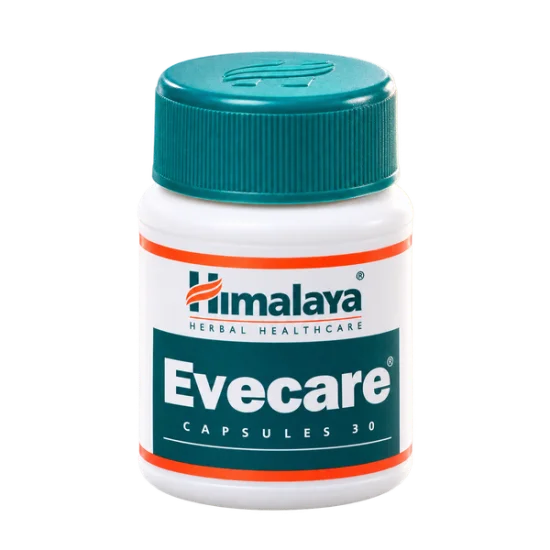
Evecare is a botanical food supplement supplied here as oral capsules in a bottle. The formulation is designed to support the female reproductive system, menstrual cycle regularity, and general pelvic wellness. It is not a synthetic hormone and does not replace assessment of conditions such as endometriosis, fibroids, polycystic ovary syndrome, thyroid disease, or unexplained infertility.
Physical Forms and Product Presentation
The capsule form may suit adults who prefer a measured solid oral dose without the taste of a liquid preparation. A syrup can be easier for people who have difficulty swallowing, while a tablet may have different disintegration characteristics from a capsule. These differences affect convenience more reliably than they predict clinical benefit.
Evecare Capsules are intended for oral administration with water. Avoid opening the capsule unless a clinician or the product’s authorised directions specifically permit it, because altering a capsule can change how its contents are taken and may worsen taste or stomach irritation.
Therapeutic indications
Evecare should not delay evaluation of symptoms that may signal a gynaecological, endocrine, infectious, or pregnancy-related problem. Seek urgent medical care for heavy bleeding with dizziness, severe one-sided pelvic pain, fainting, fever with pelvic pain, or possible ectopic pregnancy.
Arrange clinical assessment for:
- Menstrual cycles that remain markedly irregular.
- Bleeding between periods or after sexual intercourse.
- Pain that interferes with work, sleep, or normal activity.
- Repeatedly absent periods without an established explanation.
- Persistent vaginal discharge, fever, or urinary symptoms.
- Difficulty conceiving after a clinically appropriate period of regular attempts.
- New symptoms after beginning Evecare or another supplement.
A clinician may consider pregnancy testing, blood count, thyroid testing, hormonal assessment, pelvic ultrasound, infection testing, or fertility investigations according to the presentation. The correct evaluation depends on the symptom pattern rather than on the fact that a supplement is being used.
How it affects the body
Evecare combines botanical ingredients traditionally used in Ayurvedic reproductive-health practice. Saraca indica and Symplocos racemosa are associated with traditional support for menstrual regularity, while Asparagus racemosus is used as a botanical uterine tonic. These traditional roles do not establish that the supplement corrects every cause of irregular bleeding.
Menstrual timing depends on the hypothalamus, pituitary gland, ovaries, endometrium, thyroid function, metabolic health, and stress physiology. A botanical supplement may support general reproductive wellness, but it cannot be expected to normalise a cycle disrupted by pregnancy, significant anaemia, hyperprolactinaemia, ovarian disease, or marked thyroid dysfunction.
The World Health Organization describes infertility and menstrual concerns as conditions requiring appropriate clinical assessment when symptoms persist or pregnancy does not occur within the expected timeframe [1]. Evecare may be used as supportive nutrition, but prolonged irregularity, very heavy bleeding, or repeated cycle loss needs a medical explanation.
Support for Uterine Health and Menstrual Regularity
The formulation’s traditional uterine-support concept relates to the tone and function of female reproductive organs. Saraca indica and Symplocos racemosa are used in Ayurvedic preparations associated with menstrual care. Asparagus racemosus is traditionally regarded as a rasayana herb with reproductive and hormonal-support applications.
The available evidence for multi-herb formulations cannot be interpreted in the same way as evidence for a single prescription hormone. Botanical extracts vary in preparation, dose, and standardisation. A normal cycle should remain the practical goal, rather than an assumption that any change in bleeding proves hormonal correction.
When not to use it
Evecare is not suitable for someone who has had a serious allergic reaction to one of its botanical components. Not for you if you are pregnant, have unexplained heavy bleeding, acute pelvic pain, a suspected infection, or need treatment for infertility or a structural reproductive condition. It should also be avoided during pregnancy unless a treating clinician has specifically assessed its use, because reproductive-health herbs may have biological effects that are not appropriate in pregnancy.
Do not rely on Evecare alone when menstrual bleeding is severe, pregnancy is possible, pelvic pain is acute, or infertility has persisted despite regular attempts to conceive. The U.S. Food and Drug Administration explains that dietary supplements can have physiological effects and can interact with medicines, even when they are marketed as natural products [4].
When this is not for you
Use extra caution with Evecare if there is:
- A known allergy to any botanical ingredient.
- Pregnancy or a possibility of pregnancy.
- Breastfeeding.
- A history of hormone-sensitive cancer.
- Treatment with hormonal medicines or fertility medicines.
- Liver or kidney disease.
- A planned operation or procedure.
- Use of medicines that affect bleeding, blood pressure, blood glucose, or immune function.
Asparagus racemosus is traditionally associated with hormonal and reproductive support, so people receiving hormone-sensitive treatment should not assume that a plant-based product is biologically inactive. The supplement also should not be used to manage heavy bleeding caused by anaemia, fibroids, adenomyosis, or a clotting disorder.
Evecare is intended for female reproductive wellness, yet reproductive wellness is different from pregnancy treatment. Stop self-directed use if pregnancy is suspected until the ingredients have been reviewed in the context of pregnancy. The same caution applies during breastfeeding, because the safety of every botanical component may not be established for the nursing infant.
For people trying to conceive, Evecare may be considered as supportive botanical nutrition, but it should not be promoted as a fertility cure. Ovulation disorders, tubal disease, endometriosis, uterine abnormalities, and sperm-related factors require specific evaluation. Asparagus racemosus has traditional fertility-related uses, but traditional use does not establish a reliable pregnancy rate.
A fertility assessment becomes more valuable when cycles are very irregular, when there is a history of pelvic infection or surgery, or when conception does not occur within a clinically appropriate timeframe. The WHO infertility guideline supports investigation of both partners rather than assuming the cause is solely related to the female reproductive system .
Possible side effects
Evecare is a multi-herb supplement, so tolerability can vary between individuals. Possible effects include stomach discomfort, nausea, loose stools, constipation, headache, or an allergic reaction to one of the botanical ingredients. These effects are more likely to matter when several supplements are used at the same time. Individual response can change with food, dose timing, and other products. Monitoring symptoms helps distinguish intolerance from an unrelated medical problem.
Stop the capsules and seek urgent medical attention for facial or throat swelling, breathing difficulty, fainting, widespread hives, severe abdominal pain, or heavy vaginal bleeding. Severe pelvic pain, fever, or sudden weakness also requires prompt assessment rather than continued self-treatment.
Ingredients
Evecare’s botanical profile includes Saraca indica, Aloe vera, Asparagus racemosus, Symplocos racemosa, Santalum album, Adhatoda vasica, Terminalia chebula, Terminalia bellerica, and Zingiber officinale. These plants have different traditional functions and should not be treated as interchangeable sources of oestrogen or progesterone.
Saraca indica is traditionally used in female reproductive preparations and is associated with menstrual and uterine support. Symplocos racemosa is used in Ayurvedic practice for menstrual care and may contribute botanical compounds with antioxidant and tissue-support properties. Asparagus racemosus is traditionally described as a uterine tonic and reproductive-health herb; laboratory findings involving steroid-like plant compounds do not prove that it acts as human oestrogen.
Aloe vera and Adhatoda vasica contain plant compounds with antioxidant activity in laboratory settings. Santalum album is traditionally associated with urogenital and tissue-soothing applications. Terminalia chebula and Terminalia bellerica are used in traditional formulations for antioxidant and digestive support, while Zingiber officinale may contribute warming and digestive properties.
The European Medicines Agency evaluates herbal substances according to the quality and evidence available for each specific plant preparation, rather than treating every product containing the plant as clinically identical [2]. This distinction matters. Traditional use can explain why an ingredient is included, but it does not prove that Evecare treats infertility, infection, or a structural pelvic disorder.
Primary Uterine Tonics and Hormonal Modulators
Asparagus racemosus is the main botanical associated with a uterine-tonic role in the formulation. Traditional descriptions connect it with female reproductive system support and fertility-related wellness. Its use should not be described as a proven treatment for infertility, because infertility may result from tubal blockage, reduced ovarian reserve, male-factor causes, endometriosis, or endocrine disease.
Saraca indica and Symplocos racemosa are included in traditional menstrual-health preparations. Their proposed roles involve support for normal uterine function and a balanced inflammatory response. Human clinical evidence for precise hormone-modulating effects remains less established than the evidence for licensed hormonal medicines.
Antioxidant and Urogenital Defence Botanicals
Aloe vera, Adhatoda vasica, Terminalia chebula, Terminalia bellerica, and Zingiber officinale provide plant compounds studied for antioxidant or digestive properties. Antioxidants help neutralise reactive molecules in laboratory models, but a laboratory antioxidant result does not demonstrate protection against a diagnosed reproductive disease.
Santalum album is associated with traditional urogenital support. Evecare should not be used as an antibiotic or as treatment for burning urination, fever, pelvic discharge, or suspected sexually transmitted infection. Those symptoms need targeted testing and treatment.
Dosage and administration
Evecare Capsules are taken by mouth. The dose is decided individually, taking age, other medicines, and health conditions into account. A consistent routine helps reduce missed doses and makes it easier to judge whether the supplement is providing useful support.
The capsule dose is decided individually, taking age, other medicines, and health conditions into account. Evecare Capsules are taken orally with water, following the regimen selected for the individual. The duration of use also depends on the intended purpose and clinical context.
- Take the capsule at a consistent time.
- Swallow it with water rather than opening or chewing it.
- Use a meal if fasting administration causes nausea.
- Do not compensate for a missed dose by taking extra capsules.
- If a dose is forgotten, resume the established schedule rather than doubling the next intake.
- Do not combine Evecare Capsules with another Evecare presentation unless a clinician has specifically selected that plan.
A supplement intended for menstrual support requires enough time to observe cycle patterns. A single dose is not expected to create an immediate change in menstrual timing or fertility. The appropriate duration should reflect the reason for use, the person’s symptoms, and any concurrent treatment.
The National Center for Complementary and Integrative Health advises keeping clinicians informed about herbal products because supplements can affect treatment decisions and may interact with medicines [3]. This is especially relevant before fertility treatment, surgery, or treatment with hormones.
Comparison
The product available on this page is the capsule form. Evecare Syrup and Himalaya Evecare Tablets should not be used to calculate the capsule dose, because liquid and solid formulations can differ in concentration, excipients, and instructions.
| Oral form | Practical feature | Important limitation |
|---|---|---|
| Evecare Capsules | Measured, portable, no liquid taste | May be difficult to swallow for some adults |
Capsules are often convenient for adults who want a routine that fits around work or travel. Liquid preparations may be preferable for swallowing problems, while tablets may suit people who already use a solid oral routine. The choice of form does not remove the need to investigate persistent abnormal bleeding or infertility.
Liquid and Solid Oral Delivery
A capsule passes through the digestive system and releases its contents after swallowing. A syrup does not automatically work faster, and a tablet is not automatically stronger. Absorption depends on the formulation, plant extract, food intake, and individual gastrointestinal function.
Do not combine different Evecare forms to increase the perceived effect. Using more than one presentation can duplicate ingredients and make adverse reactions harder to interpret.
Common mistakes
The most frequent problems arise from treating a supplement as an emergency treatment or changing the regimen too quickly.
- Using Evecare to delay evaluation of very heavy or painful periods.
- Taking capsule and liquid forms together without a specific reason.
- Doubling the next intake after a missed capsule.
- Assuming “natural” means suitable during pregnancy.
- Combining Evecare with other hormone-support supplements without checking for overlap.
- Stopping prescribed fertility or endocrine treatment without medical direction.
- Judging the product after one or two doses.
- Failing to record bleeding dates, pain severity, or pregnancy-test results.
- Continuing the product despite swelling, breathing difficulty, fainting, or severe abdominal symptoms.
One easily missed detail is the difference between a late period and a period that is absent because of pregnancy. A pregnancy test and clinical assessment are more useful than increasing a botanical dose.
Another is the effect of digestive symptoms on adherence. Taking a capsule on an empty stomach may be uncomfortable for some people, so using a meal-based routine can make regular use easier without changing the dose.
What doctors say
In clinical practice, a doctor would usually frame Evecare as supportive care rather than a substitute for diagnosis. The useful outcome is a stable menstrual record, improved menstrual comfort, or better general reproductive-health support without masking a serious condition.
A clinician would also ask about pregnancy possibility, bleeding pattern, pelvic pain, medications, thyroid symptoms, weight changes, acne, excess facial hair, and previous fertility evaluation. Those details can point toward endocrine or structural causes that a botanical supplement cannot correct.
Patients often expect a plant-based product to be free from interactions. That assumption is unsafe. Herbal ingredients can affect digestion, bleeding tendency, glucose control, or hormone-related treatment, and the risk rises when several supplements are combined.
A practical clinical approach is to use one clearly defined regimen and track the response. Starting several reproductive-health products together makes it difficult to identify which ingredient caused benefit, irritation, or a change in bleeding.
Common questions
Does Evecare cause stomach upset?
Mild nausea, abdominal discomfort, loose stools, or constipation can occur with herbal supplements, especially when taken without food or combined with other botanicals. The NCCIH explains in its 2024 consumer information that herbal products can produce adverse effects and may interact with medicines . Persistent vomiting, severe abdominal pain, facial swelling, or breathing difficulty requires stopping the capsules and obtaining urgent medical care.
Is Evecare suitable for people under 18?
Evecare is intended for adult reproductive-health support, and use under 18 should be directed by a qualified clinician. The WHO adolescent health framework published in 2023 supports age-appropriate assessment of menstrual problems rather than automatic self-treatment with supplements [5]. A teenager with painful, very heavy, or absent periods may need assessment for anaemia, endocrine disease, pregnancy, or a gynaecological condition.
Can Evecare be combined with hormone medicines or fertility supplements?
Combining Evecare with hormonal medicines, fertility medicines, or other reproductive-health supplements should be planned with the treating clinician. The FDA states that dietary supplements can interact with prescription medicines and can alter treatment decisions . Avoid stacking multiple products with similar hormone-related claims, because overlapping botanical effects and ingredients can make side effects difficult to identify.
Which symptoms mean that Evecare should be stopped and urgent medical care sought?
Stop use and seek urgent care for breathing difficulty, swelling of the lips or throat, fainting, severe abdominal or pelvic pain, or heavy vaginal bleeding with weakness. The WHO reproductive-health guidance published in 2022 treats severe bleeding, acute pelvic symptoms, and pregnancy-related warning signs as reasons for prompt clinical assessment . Fever with pelvic pain or a positive pregnancy test accompanied by one-sided pain also needs urgent evaluation.
How long does one Evecare capsule keep working?
A single capsule is not expected to provide a clearly defined, immediate menstrual or fertility effect. Botanical ingredients are used as part of a continuing regimen, and response is judged through symptoms and cycle records rather than by an hourly duration. The EMA’s 2018 herbal-medicine framework explains why duration and effect cannot be inferred from traditional use alone for every multi-herb product .
Which condition rules out Evecare?
A serious allergy to any ingredient rules out Evecare, and pregnancy requires specific clinical review before use. People with unexplained heavy bleeding, acute pelvic pain, or a suspected reproductive infection should not use the supplement as their main treatment. The FDA’s 2022 supplement guidance states that medical conditions and concurrent medicines must be considered before using botanical products .
What should be done if the expected result does not appear?
Keep a record of menstrual dates, bleeding intensity, pain, and any new symptoms rather than increasing the capsule intake independently. The WHO infertility guideline from 2022 supports timely evaluation when conception does not occur or menstrual symptoms remain unexplained . Persistent symptoms may require pregnancy testing, blood tests, pelvic imaging, or fertility assessment instead of a longer period of self-directed supplementation.
Do you offer anonymous delivery?
Your order will be securely packed and shipped within 24 hours. This is exactly what your package will look like (images of an actual item sent). It has the size and look of a regular private letter (24x11x0.7 cm) and its contents cannot be seen.
How Buyers Rate Evecare
-
Ayesha A., 51 Hatta · Several weeks 14 Nov 2026Rating: 3 out of 5I used the capsules for several weeks and noticed that my cycle felt more settled, although the change was gradual. I still had some lower-abdominal discomfort before menstruation, so I viewed it as support rather than a complete solution.
-
Joy H., 69 Al Barsha · About two months 23 Nov 2026Rating: 3.5 out of 5I took Evecare Capsules as part of my daily routine for about two months. My menstrual comfort improved a little, but the result was slower than I expected and I had mild stomach upset during the first few days.
-
Cristina A., 69 Abu Dhabi · Several weeks 25 Oct 2026Rating: 5 out of 5I used the capsules consistently for several weeks and felt that my cycle became easier to track. The routine was convenient because I could take the bottle with me and did not need to measure a liquid.
-
Hessa C., 29 Ruwais · Around six weeks 3 Nov 2026Rating: 4.5 out of 5I took Evecare Capsules regularly for around six weeks and felt more comfortable during my monthly cycle. I liked having a simple capsule routine and was satisfied with the gradual improvement.
-
Rachel, 57 Bur Dubai · Several weeks 11 Nov 2026Rating: 4 out of 5I used the capsules for several weeks and noticed better menstrual comfort and a more predictable routine. The benefit was not immediate, but it became clearer when I tracked my cycle dates.
Sources
- World Health Organization (2022). WHO guideline for the prevention, diagnosis and treatment of infertility.
- European Medicines Agency (2018). Guideline on quality of herbal medicinal products/traditional herbal medicinal products.
- National Center for Complementary and Integrative Health (2024). Herbs at a Glance.
- U.S. Food and Drug Administration (2022). Dietary Supplements.
- World Health Organization (2023). Global Accelerated Action for the Health of Adolescents: Guidance to Support Country Implementation.
