
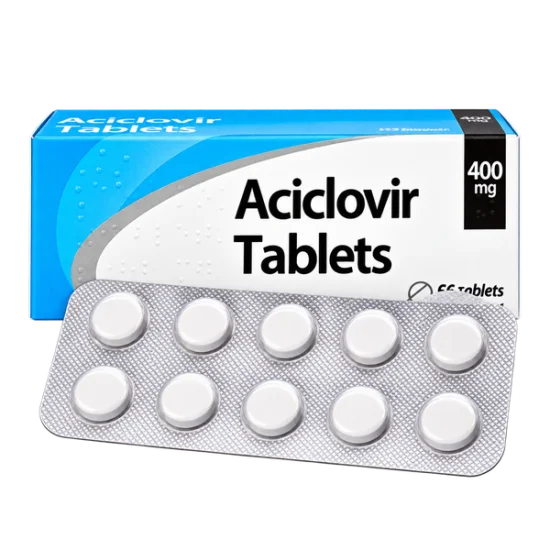
Aciclovir
Active ingredient: Aciclovir
Delivery: from 4 days
- Only original products
- Worldwide Delivery
- 24/7 Support
Adults and children with herpes simplex or varicella-zoster infections may receive Aciclovir as an oral antiviral treatment. Aciclovir tablets contain the active substance aciclovir, which limits viral DNA replication and can shorten or reduce outbreaks when treatment starts early.
Product information
Aciclovir is a synthetic nucleoside analogue antiviral. Its commonly used alternative spelling is acyclovir.
Therapeutic indications
Aciclovir is used against herpes simplex virus type 1, herpes simplex virus type 2, and varicella-zoster virus. The clinical presentation depends on which virus is active and where the infection occurs.
- Cold sores: Usually associated with HSV-1, these cause grouped blisters around the lips or mouth. Oral treatment may be used when episodes are extensive, frequent, painful, or accompanied by other symptoms.
- Genital herpes: HSV-1 or HSV-2 can cause painful genital or perianal blisters, ulcers, burning, and tender lymph nodes. Aciclovir may be prescribed for a first episode, a recurrence, or suppressive treatment in people with frequent recurrences.
- Shingles: Herpes zoster results from reactivation of varicella-zoster virus. It commonly causes one-sided pain followed by a band of blisters along a nerve distribution.
- Chickenpox: Varicella-zoster virus causes chickenpox. Antiviral treatment is selected according to age, severity, immune status, pregnancy status, and the clinician’s assessment.
- Severe or complicated infection: Hospital treatment may be required when infection affects the brain, lungs, eyes, or other organs, or when the immune system is significantly weakened.
The medicine works best when used early. For shingles, treatment is generally most useful when started soon after the rash appears, especially while new lesions are still forming. Early management may reduce the intensity of acute symptoms, although it does not guarantee prevention of postherpetic neuralgia, which is persistent nerve pain after shingles.
| Viral infection | Typical presentation | Role of Aciclovir |
|---|---|---|
| HSV-1 or HSV-2 | Cold sores or genital herpes | Treatment of episodes or suppression of frequent recurrences |
| Varicella-zoster virus | Shingles or chickenpox | Early antiviral treatment according to clinical risk and severity |
A clinician may choose a different route or treatment plan for eye involvement, central nervous system infection, extensive disease, or reduced immune function. Oral tablets are intended for systemic treatment and are not a substitute for specialist care when the infection is severe.
How it affects the body
The medicine becomes active mainly inside cells infected by herpes viruses, where viral thymidine kinase helps convert it into its active form.
The active compound then inhibits viral DNA polymerase. It becomes incorporated into the growing viral DNA chain and stops further chain extension. This interrupts replication of the virus while producing much less effect in uninfected human cells. The selectivity explains why Aciclovir targets viral multiplication rather than directly destroying infected tissue.
Aciclovir does not remove herpes viruses from the body. Herpes simplex virus and varicella-zoster virus can remain dormant in nerve tissue after the visible infection improves. Treatment reduces viral replication during an episode, which can help lesions heal sooner and lower the duration of symptoms. The FDA prescribing information describes this mechanism and the approved clinical uses of oral aciclovir [1].
When not to use it
- Previous serious allergy to aciclovir, valaciclovir, or an excipient in the formulation.
- Moderate or severe kidney impairment.
- Dehydration, repeated vomiting, or difficulty maintaining fluid intake.
- Older age with frailty, cognitive impairment, or uncertain kidney function.
- Pregnancy or breastfeeding, where the expected benefit and clinical circumstances guide treatment.
- Neurological disease or a previous reaction to antiviral treatment.
- Severe immune suppression, extensive skin disease, eye involvement, or suspected central nervous system infection, where oral self-management may be inadequate.
Medicines that may increase kidney stress or alter aciclovir clearance include some immunosuppressants, nephrotoxic antibiotics, and other medicines eliminated through the kidneys. Probenecid and mycophenolate can affect exposure to aciclovir or its metabolites. A prescriber needs a complete medication list, including non-prescription pain medicines and supplements.
When this is not for you
Not for you if you have had a serious allergy to aciclovir or valaciclovir, significant kidney impairment, dehydration, or symptoms requiring urgent specialist assessment.
Possible side effects
Most people tolerate oral Aciclovir without serious problems, but unwanted effects can occur. Common or relatively common reactions include headache, nausea, vomiting, diarrhoea, abdominal discomfort, tiredness, and skin rash. These effects may improve during treatment, but persistent or worsening symptoms need medical review.
Neurological reactions are uncommon but clinically significant. Confusion, agitation, hallucinations, tremor, unusual drowsiness, speech changes, or seizures require urgent assessment. The risk rises when aciclovir accumulates because of impaired kidney function, excessive dosing, dehydration, or advanced age.
Allergic reactions can include widespread hives, facial or throat swelling, wheezing, blistering skin, or difficulty breathing. These symptoms require emergency care. A mild local rash may still need assessment because herpes infections and medicine reactions can look similar.
Kidney-related problems may present as reduced urination, swelling, flank discomfort, unusual tiredness, or sudden confusion. Drinking a suitable amount of fluid supports safe clearance, but people with fluid restrictions should follow their individual medical plan.
One practical detail is easy to miss: a person can feel better before viral shedding has completely stopped. Symptom improvement does not prove that transmission risk has disappeared. Genital herpes can spread through sexual contact even when visible lesions are absent, so sexual-health advice remains relevant during and between outbreaks.
Ingredients
The Aciclovir product described here is supplied as tablets containing the active ingredient aciclovir for oral administration. The amount used differs between strengths and between users, so there is no single dose that suits everyone.
Other aciclovir formulations exist in clinical practice, including suspensions, topical preparations, ophthalmic ointments, and intravenous treatment. These forms are not interchangeable with oral tablets. A cream acts mainly at the application site, while an oral tablet produces systemic exposure. Intravenous treatment is used in hospital settings for serious infections or when oral treatment is unsuitable.
Dosage and administration
- Dose: Take the amount prescribed for the specific infection and user; dosing differs between strengths and between users, so there is no single amount that suits everyone.
- Frequency: Take the tablets at the prescribed intervals. The number of times per day depends on the treatment purpose.
- Timing: Swallow the tablet with water. It may be taken with food if stomach discomfort occurs, although food is not required for the medicine to work.
- Duration: Continue treatment for the duration prescribed for the infection. The course differs between treatment purposes.
- Route: Use these tablets by mouth. Topical, ophthalmic, and intravenous aciclovir formulations are different routes and are not interchangeable with oral tablets.
- Missed dose: Take a missed dose when remembered unless the next scheduled dose is close; in that situation, skip the missed dose and resume the usual schedule. Do not take two doses together.
- Fluids: Maintain regular fluid intake unless a clinician has prescribed fluid restriction for a heart, kidney, or another medical condition.
Comparison
Aciclovir, valaciclovir, and famciclovir belong to the same broad antiviral treatment group, but they differ in how the body handles them and how often they may need to be taken. The most suitable option depends on the infection, kidney function, previous response, treatment objective, and prescribing guidance.
| Treatment | Active substance or mechanism | Typical clinical distinction |
|---|---|---|
| Aciclovir | Aciclovir; inhibits herpes-virus DNA polymerase | Established oral option for HSV and varicella-zoster infections |
| Valaciclovir | Prodrug converted to aciclovir | Often selected when less frequent administration is useful |
| Famciclovir | Prodrug converted to penciclovir | Alternative option for selected HSV or shingles treatment |
Valaciclovir is converted to aciclovir after absorption, so the medicines share an antiviral target. Famciclovir produces penciclovir, which also interferes with herpes-virus DNA replication. Differences in dosing convenience do not remove the need for renal dose adjustment.
Aciclovir can be a practical choice when the prescribed schedule is manageable and the clinician wants direct treatment with the established active substance. A different antiviral may be preferred when adherence has been difficult, recurrence patterns are frequent, or a particular clinical guideline supports another option. The World Health Organization describes aciclovir as an important medicine for herpesvirus infections [2].
Common mistakes
Several practical errors can reduce benefit or increase risk:
- Starting tablets several days after new lesions have appeared without discussing whether treatment is still appropriate.
- Taking extra tablets because pain or blisters have not improved immediately.
- Doubling a missed dose.
- Continuing sexual contact during active genital lesions without discussing transmission risk.
- Using oral tablets for an eye infection without urgent ophthalmic assessment.
- Ignoring confusion, hallucinations, severe drowsiness, or reduced urination.
- Failing to mention kidney disease, dialysis, dehydration, or medicines that affect renal function.
- Sharing tablets with a partner or family member who has similar-looking symptoms.
A common misunderstanding is that a cold sore and genital herpes always involve different viruses. HSV-1 and HSV-2 can both infect oral or genital sites. The location, recurrence pattern, examination, and targeted testing help determine the diagnosis.
What doctors say
In clinical practice, doctors usually assess three points before selecting oral Aciclovir: the likely virus, the time since symptoms began, and kidney function. A small recurrent cold sore may need a different approach from a first genital herpes episode or a painful shingles rash.
Consistency matters because the medicine suppresses active viral replication only while adequate antiviral exposure is maintained. Stopping early may be reasonable in some circumstances if a prescriber changes the plan, but stopping because the skin looks better can leave the infection incompletely treated.
The EMA product information for aciclovir describes renal adjustment, hydration, neurological reactions, and interactions as central prescribing considerations [3]. Physicians also distinguish treatment from suppression: treatment addresses a current episode, while suppressive therapy aims to reduce the frequency of future recurrences.
A useful clinical expectation is modest and realistic. Aciclovir can shorten an episode and reduce viral multiplication, but it cannot eliminate latent herpes viruses or guarantee that a future outbreak will not occur. Repeated episodes, unusual lesions, or poor response call for diagnostic review rather than automatic dose escalation.
Common questions
Can Aciclovir affect driving, concentration, or machinery work?
Aciclovir may cause headache, dizziness, drowsiness, confusion, tremor, or other neurological symptoms in some people. The EMA safety information available in 2024 describes particular concern when renal impairment allows the medicine to accumulate [4]. Avoid driving or operating machinery if you feel dizzy, unusually sleepy, confused, or less alert. Seek urgent medical assessment for hallucinations, severe confusion, or seizures rather than attempting to continue normal activities.
How does Aciclovir differ from the closest alternatives?
Aciclovir directly provides the active antiviral substance that inhibits herpes-virus DNA polymerase. Valaciclovir is converted into aciclovir in the body, while famciclovir is converted into penciclovir and acts through a related antiviral pathway. WHO guidance published in 2023 recognises these medicines as related options, with selection influenced by the infection, renal function, adherence, and local prescribing practice [5]. Aciclovir may suit a person who can follow its prescribed schedule, while another option may be chosen when less frequent dosing is clinically preferable.
Which symptoms mean stopping Aciclovir and seeking urgent medical care?
Stop taking further doses and obtain urgent medical help for facial or throat swelling, breathing difficulty, widespread blistering skin, or a rapidly spreading severe rash. Confusion, hallucinations, seizures, profound drowsiness, or major changes in behaviour can indicate a serious neurological reaction. Reduced urination, severe flank pain, or sudden swelling may signal kidney complications. A 2022 review in Clinical Kidney Journal also highlights the importance of recognising aciclovir neurotoxicity and renal accumulation promptly.
How is Aciclovir used in older adults?
Older adults may receive Aciclovir, but kidney function and hydration require closer attention. Age-related reduction in renal clearance can occur without obvious symptoms and may increase the chance of confusion or other adverse effects. The British National Formulary guidance reviewed in 2025 recommends renal-dose consideration for aciclovir and careful monitoring in vulnerable patients. An older person who develops new confusion, reduced urine output, or marked sleepiness needs prompt clinical review.
What should be done after a missed dose?
Take the missed dose when remembered unless the next scheduled dose is close. If the next dose is near, skip the missed one and return to the prescribed timetable. Do not take two doses together to compensate. NHS medicines guidance updated in 2025 advises obtaining individual instructions when several doses have been missed, vomiting prevents tablet absorption, or the infection is worsening.
Do you offer anonymous delivery?
Your order will be securely packed and shipped within 24 hours. This is exactly what your package will look like (images of an actual item sent). It has the size and look of a regular private letter (24x11x0.7 cm) and its contents cannot be seen.
How Buyers Rate Aciclovir
-
Vikram, 69 Sharjah 25 Oct 2026Rating: 3 out of 5I used the 400 mg tablets for a shingles outbreak. The burning eased after several days, but the rash still took time to settle. I felt unusually tired and needed to be careful about drinking enough water.
-
Mohammed, 55 Al Nahda 3 Nov 2026Rating: 4 out of 5I started treatment with the prescribed 400 mg tablets when the familiar tingling appeared. The outbreak stayed smaller than usual and cleared within several days without the long period of discomfort I had experienced before. The tablets were straightforward to take.
-
Hamza, 53 Al Reem Island 8 Nov 2026Rating: 5 out of 5Aciclovir 400 mg tablets helped with a recurrent cold sore when I began them early. The blister was less troublesome and healed within several days, sooner than my previous episodes. I was satisfied with the result.
-
James, 28 Hatta 14 Nov 2026Rating: 3 out of 5The 400 mg tablets helped during the outbreak, but the improvement over several days was slower than I expected. I still had tenderness for several days, so I learned not to judge the treatment after the first dose.
-
Sultan T., 63 Al Qusais 21 Nov 2026Rating: 4 out of 5I used the prescribed 400 mg tablets for genital herpes and noticed the pain reduced as the lesions began to heal. The schedule was manageable over several days, and the episode was easier than an earlier one.
Sources
- U.S. Food and Drug Administration (2019). Acyclovir prescribing information.
- World Health Organization (2023). WHO Model List of Essential Medicines.
- European Medicines Agency (2024). Summary of Product Characteristics (SmPC) — aciclovir.
- European Medicines Agency (2024). Aciclovir safety information and product information.
- National Institute for Health and Care Excellence (2025). Herpes simplex and herpes zoster: antimicrobial prescribing guidance.
